
Why Your $500/Month Pilates Studio Is A Scam
"I want a home reformer for me to take Pilates anytime, anywhere I want. So I looked all the machines on the market, and my heart sank."
With Eric (Designer & Co-Founder) and Tintin (Pilates Instructor) from Pavo Fitness
- Pilates is "a rich people sport." Sessions cost $100 each, monthly memberships run $500. Traditional reformers cost up to $3,000. Eric knew he could do better.
- Eric designed a smart, foldable reformer at 1/3 the price. The Pavo Lite weighs half of a traditional reformer, has sensors, an app, and game-like workout modes.
- $400K raised on Kickstarter in just 48 hours. When we sat down with Eric in December, he hadn't even launched yet. Now it's one of the most funded fitness products on the platform.
- Shenzhen's hardware ecosystem enables rapid prototyping. From 3D printing to mass production in one year - a timeline that would take two years anywhere else.
- Thomas shares his personal 140kg weight loss journey. He lost 60kg and credits sports with changing not just his body, but his entire mindset and career trajectory.
A $400K Kickstarter in 48 Hours
When we sat down with Eric in December 2025, he hadn't even launched on Kickstarter yet. He was a designer in Shenzhen with a 3D-printed prototype, a small team of co-founders who all shared one thing in common - chronic body pain - and a vision to make Pilates accessible to everyone.
Fast forward to launch day: $400,000 raised in just 48 hours. The Pavo Lite became one of the most funded fitness products on Kickstarter. The early bird price? $899 - compared to $3,000 for a traditional reformer.
"It's a Rich People Sport"
Eric's story starts with a problem millions of people share. After years of desk work as an industrial designer, he developed chronic back pain. A friend recommended Pilates. After just a few sessions, his pain eased and his body shape improved. But there was a catch: sessions cost 400-500 RMB each ($80-100). Monthly memberships in Shanghai or Germany run $400-500.
As a fresh graduate, Eric couldn't afford it. He wanted a home reformer, but every machine on the market was either too bulky, too ugly, or both. As a designer in Shenzhen, he thought: "We could do better."
"I want a home reformer for me to take Pilates anytime, anywhere I want. So I looked all the machines on the market, but when I see, my heart sank because either they are very bulky or ugly."
Visiting Every Pilates Studio in Shenzhen
Eric did what every great founder does: he hit the ground. He visited almost every Pilates studio in Shenzhen, talking to instructors and clients about their problems. The biggest pain points? Traditional reformers are too bulky for home use, and there's no way to track your progress.
His solution: a reformer that weighs half of a traditional one, with built-in sensors, an on-device display, and a companion app that tracks calories, resistance, time, and progress over time. Plus interactive games to keep you motivated.
The Tech Inside: Sensors, App, and Games
The Pavo Lite isn't just hardware - it's a connected fitness platform. The built-in sensor tracks carriage movement, allowing the app to record detailed workout data. Eric designed an AI-powered recommendation system that suggests classes based on your performance history.
The app also includes a community feature where users can share experiences and workout ideas - solving the loneliness problem that kills most home fitness equipment. As Eric puts it: running on a treadmill is boring because you're repeating the same movement. Pilates has hundreds of different movements.
Wait, Pilates Was Invented by a German?!
One of the most surprising moments in the episode: Tintin reveals that Pilates was invented by Mr. Pilates - a German. The sport spread rapidly when he moved to America, where dancers discovered it was incredibly useful for improving performance and recovering from injuries. Female dancers and actresses popularized it, which is why many people think of it as a "women's sport" - but as Eric and Tintin explain, it's actually incredibly challenging and beneficial for everyone.
Finding Co-Founders with Body Problems
Eric found his team at the Shenzhen Academy, a community for recent graduates who want to build products. The funny thing? All his co-founders share physical ailments. One designer has an ankle problem affecting his balance. An engineer has scoliosis. As Eric jokes: "You can say we were just looking for people with body problems."
Their shared experience with pain gave them an authentic connection to the product and a deep understanding of the customer need. Investors were convinced too - they saw the market data, the customer research, and said: "Here's my money. But since you're in Shenzhen, add some technology into it."
China vs. Western Fitness Markets
Eric and Tintin chose to launch abroad first. The western fitness market is more mature, and people are more willing to invest in home fitness equipment. But they believe China's fitness boom is coming. As Eric notes, 15 years ago Germany experienced a massive gym and supplements boom - China is heading in the same direction.
The desire for a healthy lifestyle is universal. The difference is timing. In big cities like Shanghai, Pilates studios and supplement shops are already popping up everywhere. With China's massive population, the potential is enormous.
Thomas: "I Was 140kg"
The conversation takes a personal turn when Thomas shares his own transformation. At his heaviest, he weighed 140 kilos (308 lbs). He lost around 60kg and credits the journey with changing not just his body, but his entire mindset.
"If I wouldn't have lost the weight, I don't think that we would sit here together. All what we do right now, it's all part of the progress of me losing my weight, getting a much stronger mind, and then building my own business."
Eric resonates with this. Whether he's having a tough day or a great one, the gym is his constant. Sports teaches the discipline of long-term thinking - you can't sign up for a gym membership, go for three weeks, and expect results. The same applies to building a company.
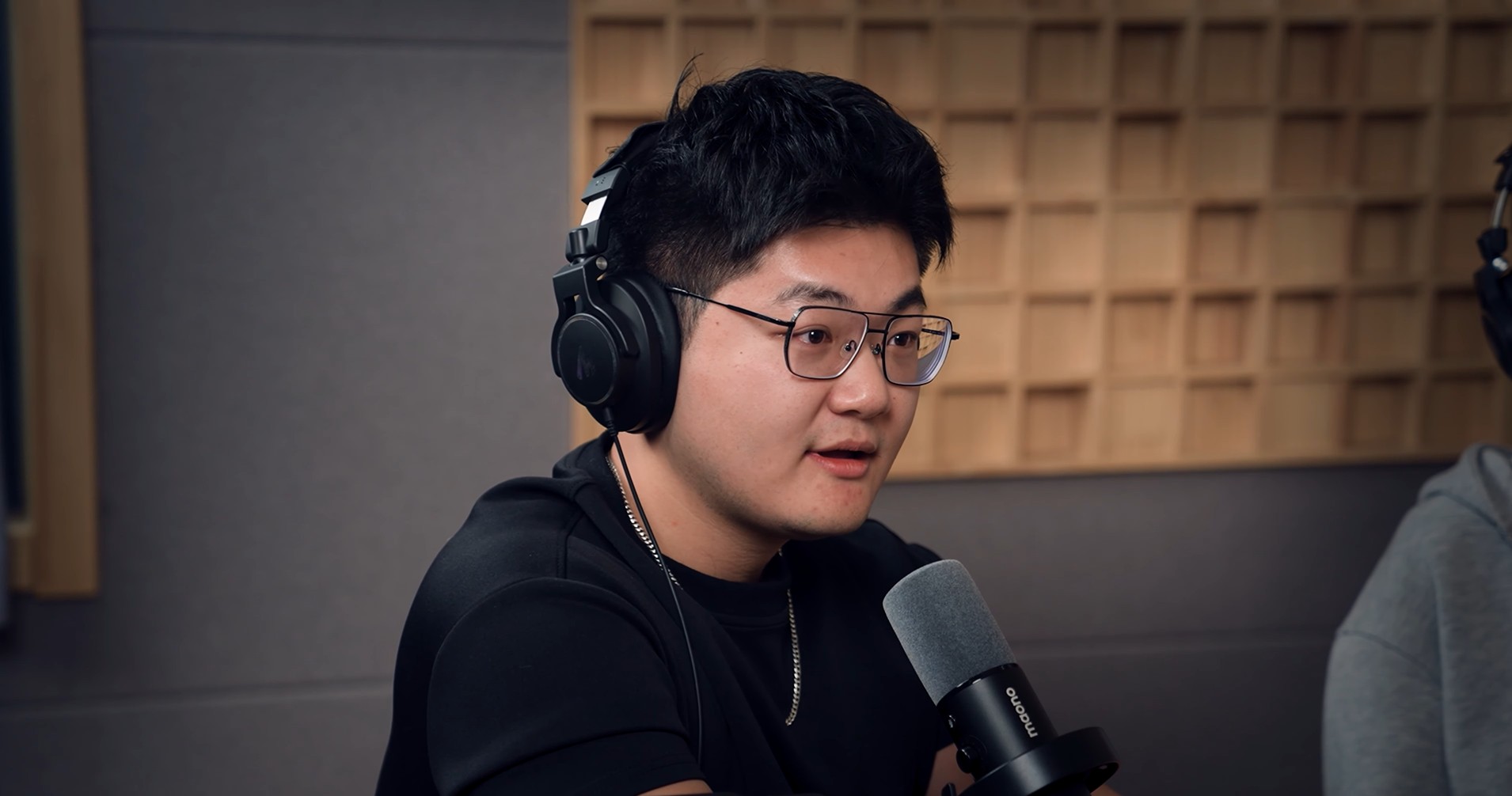
Eric
After years of chronic back pain from desk work, Eric discovered Pilates but couldn't afford the $100-per-session cost. Based in Shenzhen, he studied industrial design and joined the Shenzhen Academy, where he assembled a team of co-founders who all shared one thing: body problems. Together they designed the Pavo Lite - an intelligent, foldable Pilates reformer that raised $400K on Kickstarter in 48 hours.
Tintin
Former product manager in mobile internet who worked "007" (24/7). After health issues from extreme work pressure and stress eating, she left tech to pursue fitness full-time. Now a Pilates instructor in Shenzhen, she works with clients ranging from office workers to pregnant women, tennis players, and jazz dancers. She brings deep expertise in movement science and a personal story of transformation to the Pavo team.
Thomas: This founder built a Pilates machine in his apartment and raised almost 400,000 on Kickstarter in just 48 hours. A session of Pilates class might take four to 500 RMB, which is a huge cost. In Germany it's the same, like when you want to be member of such a Pilates studio, it's like 500 euros a month or something. It's very expensive. So it's a rich people sport. I want a home reformer for me to take Pilates anytime, anywhere I want. So I looked all the machines on the market, but when I see, my heart sank because either they are very bulky or ugly.
So as a designer, we know we could do better. Eric is based here in Shenzhen, the hardware capital of the world. In just one year, he went from a 3D printed prototype in his apartment to a fully functional smart Pilates reformer. This is the story behind Pavo Fitness. When we sat down with Eric in December, he hadn't even launched yet. Now it is one of the most funded fitness products on Kickstarter.
Thomas: So Eric. For the people who don't see you, you are a very strong man.
Eric: I'm a very strong man. Compared to Nathan Michael, I don't think. I'm a strong, but still you are.
Thomas: So the point I want to make is you look like you really like to go to the gym, you do some workouts and how the heck did you think of building a product like this?
Eric: Yeah. Very pink Pilates. How to say it in English? It's a Pilates bed. Actually it's Pilates Reformer.
Thomas: Pilates Reformer. Okay. Yeah, yeah. So when did you have the idea to do something like this?
Eric: Actually I'm very into sports when I was very young because I grew up in north of China and my parents usually take me to go skiing and climbing mountains. So but after I went to college, I want to do some very professional workout like building up my shape and to look better. But after I work and because of my designer career, I need to spend countless hours hunched over the table. So I have many very common pains and itches.
So then one of my friends recommended me to try Pilates and I think, well, why not give it a shot. But what amazed me is that after trying a few sessions of Pilates sessions, I found that my pain eased and also my body shape got better. So I think, wow, it's very amazing. But then reality hit because at that time I just got out of school, I'm a freshman, which means I don't have much money.
But as Tintin might know, a session of Pilates class might take 4 to 500 RMB, which is a huge cost.
Thomas: Which is also expensive. $80, $90.
Eric: Yes, yes. It's very expensive. So it's a rich people sport. Actually you can say that. Yes. You need to take some money to base you.
Thomas: I mean in Shanghai if you go to these Pilates courses, it is even more expensive. There are like places like high class fitness studios where you pay close to US$100 for one session.
Eric: Yeah, yeah. In Germany is the same like when you want to be member of such a Pilates studios, it's like I don't know, 400 or 500 euros a month or something. It's very expensive.
Eric: Yes, yes. And also the commuting to the offline Pilates studio is also a trouble. So at that time I think I want a home reformer for me to take Pilates anytime, anywhere I want. So I looked all the machines on the market but when I see it, my heart sank because either they are very bulky or ugly. So as a designer we know we could do better. So at that time I wanted to design a Pilates reformer that is functional and also aesthetic and also joyful to use - all that in one reformer.
Thomas: So you're a designer from your education background?
Eric: Yes, I'm the co partner and co founder and designer behind Pavo.
Thomas: I mean like before you did this Pilates Reformer, you were a designer, you were designing other stuff?
Eric: Actually I studied industrial design when I was at college and after I graduate I came to Shenzhen Academy where I met other co founders to build this dream together.
Thomas: So this academy was also part of the university we're in?
Eric: Actually it's like a community and academy for those people and students who just graduated from school and want to do some very interesting and amazing product.
Michael: So you basically did what most founders do. You encountered a problem in your daily life and then you said I will solve this problem for me and for other people and make a big business out of it.
Eric: Yes, yes.
Thomas: So how did you start then? You now have the problem. You make online research. You see all of them are very bulky, very big, very expensive and very ugly. So what was then the next step for you to say this is how I start to solve this problem?
Eric: You mean when I encounter this problem and how do I to design this? Well, actually, the first step is to understand the market and your customers. So I take a few months to know about our customer and know about the problems they are encountering when using this product. So Tintin is one of our customers.
Thomas: So Tintin, what is a typical Pilates customer?
Tintin: First of all, you have the money and you have spare time. And most of my clients are office workers, and the half is pregnant women or new moms. They use Pilates to rebuild their core control and improve their physical capacity after giving birth.
Thomas: So you were going to these Pilates studios and then talking to the people coming out from the Pilates studios, why they don't do the Pilates at home?
Eric: Well, at that time, I visited many of Pilates studios in Shenzhen, almost every Pilates room in Shenzhen. And actually, the people I met were very friendly and also very willing to share their story and also their problems when using the reformer. So at that time, I know I chose a right thing to do.
Thomas: Yes, people who do sports actually really like to talk about it. I know it from myself. There's this very famous TikTok series where he asks people, oh, you look very fit. What is your workout routine? And they all love to share their stories, right?
Eric: Yeah, that's true.
Thomas: And one learning I had from this podcast also that every product we talked about and all the founders, they went out and did market research on the ground. So we had this grill where they go to the bars and restaurants and ask people what kind of meat they like to eat. And they have this pet toys where they go and talk to the dog owners, ask them what problems they encounter. So this is a very interesting approach. And the one thing you learned, the lesson, what was the biggest problem of the Pilates users?
Eric: Well, actually, one biggest problem now also is my problem - the traditional Reformer was so bulky and so difficult to use when you want it at home. Actually, our product is half weight of the traditional one. So it's very easy for a girl like Tintin to use it at home. And also one thing that I learned from interviewing all those clients is that when you are doing traditional Pilates, it's hard for you to witness your progress because it might take a few months to see how you make the progress. But in this product I add some very intelligent part in it. You can see your workout data, like your calories you burned and the time you're using, the resistance you are using. So it's very easy for you to see from the report how you make progress.
Thomas: But the product itself doesn't have a display, right? It's just the bed.
Eric: Also it has a display. Yeah, it has a little screen on it.
Thomas: Okay, so it's like it's not just simple hardware, it has technology in it, right? So what is - can you talk about the technology or are you afraid that people who listen to this will just copy your technology?
Eric: Actually, the most important part is the sensor we are using. So by using the sensor we can track all the data for the users. And also one thing very interesting, that because of the sensor we can track the movement of the carriage. The carriage is one part of this Reformer. So you can play a very interesting game, interactive game.
Thomas: It helps you to keep doing, right?
Eric: Yeah, that's good. It's very interesting. And you can discover it yourself after buying our machine.
Thomas: So now we have the problem, but we're still not at the product, right? You talked to these pregnant women or new mothers and they talk about the problems. Now you have the data, now you have the problems. What is the next step?
Eric: Well, the next step is after I discover all the problems and the support from our clients, we decided to design some very initial drafts of the product and we designed many, many versions, countless prototypes of the Reformer.
Thomas: But only digital prototypes. You didn't go to the factories with the first prototype?
Eric: Yeah, we are using the 3D printing. It saved a lot of time and money for us to build our machine.
Thomas: So when was it? When did you start with this?
Eric: This machine takes around one year to finish to this kind of shape. And about the prototype, it took us three to four months to actually decide which one we want.
Thomas: This is actually really fast, right, because most of the hardware another guest told us takes two years at least to develop, right?
Eric: Yes, but we are still improving the details. We want to give our customers the best shape of the product.
Thomas: So this is now already the ready product that you're going to sell or is it still a prototype?
Eric: Actually the shape is final version. Yes, but we still want to make some more. Good enough isn't enough for us.
Thomas: So after you designed the prototypes then you 3D printed them and what was the next step? Was the next step then getting customer feedback for the prototypes?
Eric: Yes, yes. And at that time we have three design versions of this prototype and we asked maybe a hundred or customers to see, to get the feedback from the customers and to help us decide which one we want to further.
Thomas: So who is your target client? Like your perfect ideal client? Is it just like more like a female product?
Eric: Female. Most of our clients are female like Tintin. And for example the ideal clients for us is those people who have already bought a traditional reformer at home and found that it's very hard to use and want to find something better. But their problem is that there's no good enough product in the market right now. And also some clients who chose to go to offline practice studios, they also want an at-home practice reformer for them to use.
Thomas: It's a very good combination. For me it should be very valuable to also have something like that at home because I don't like cardio but I only do weights basically. And there was - I remember even Arnold Schwarzenegger said bodybuilding is like ballet but only with muscles. You need to have it because it gives you like a good posture and core stability.
Eric: Yeah, and there's one thing very interesting - right now most of our clients are female but also there are a few males who want to do Pilates. And also including me because I love to do workout. Before I tried Pilates, it's very hard for me to get the connection between my mind and my targeted muscle. And after I took a few sessions of Pilates, it's easier for me to reach the targeted muscle.
Thomas: Because you have a lot of time under tension which is also very crucial when you work out. You need to create this muscle mind connection first and then even in the gym you can create some deep stabilizing muscles. But it's a completely different thing. And Tintin might have also helped many male clients. Tintin, tell us about the male clients because we have to say here now: all the guys, go out, do Pilates, do yoga. It really helps a lot and it is very, very challenging.
Tintin: One of my male clients is a tennis player, so I helped him with some rotation and even anti-rotation training for his body. So it helped him to do well in tennis. And the other one is a jazz dancing teacher. He has low back pain, so after I practice Pilates I help him to build his deep core control and rebuild the spine function, release his stress of his lumbar, so improve his low back pain.
Thomas: What do you think, why is it like a typical female sport? Why are not more men doing Pilates?
Eric: Too hard.
Tintin: It is really hard. I think Pilates is low intensity - typical for a long period of time you have to hold the tension. It's actually very hard. There are stereotypes about Pilates. Because Pilates was invented by Mr. Pilates. He's also from Germany.
Thomas: Oh really? Wow. Never knew that. And his name is Pilates?
Tintin: Yes, this kind of sport is named after him. And Pilates was actually spreading very fast after he went to America and many of the dancers found it was very useful for them to improve and recover from injury. So at first there are many female dancers who really liked to use it and after then many singers and actresses loved it. So after that time Pilates gradually became very popular. So people now think maybe it's a female practice, but actually it's very useful and very good for everyone including male, female, old and young.
Thomas: So now you did the market research and you know that there is a market for it. And how did you find your co-founders or how did you find your team in the academy?
Eric: Yes, it's a very interesting story to tell. As I mentioned before, I graduated from university and after graduation I came to Shenzhen Academy. It was the year the academy was built. And many of my co-founders were found at - they were my classmates actually. And very interesting is that we all have some ailments. Like one of my designer co-founder, he has a little problem about his right ankle influencing his balance. And another engineer, he has - how to say the word? Scoliosis.
Thomas: So it's very fun that you all have these little problems about your bodies. So you were just looking for people with body problems?
Eric: Well, you can say that. Because we all have that feeling, the bad feelings about our body and see that Pilates is very useful for us and also the product on the market isn't good enough. And we as designer and engineer, we know we could do better and build a better Pilates reformer for us and for our clients to use.
Thomas: And then you also got some investment, right? So how did you pitch this to the investors?
Eric: Well, after I said all the market and all the problems about the product, they said go ahead and do it, here is my money. But since we're here in Shenzhen, you have to add some technology into it. Not only a hardware product, we need to have some software.
Eric: Yes, but I think technology here on our product is very helpful for users. It's not useless. Just as I mentioned, the technology can help us to record all the workout data and to help us to get better about our performance on the Pilates Reformer.
Thomas: So how does it work in detail? How is technology incorporated in this product? How does the sensor basically work?
Eric: Well, actually there is a little screen on the Reformer and users can see the data like the calories and the resistance and the time they are doing while they are using the Pilates Reformer, using our Pavo. And all the data was recorded on the sensor behind the screen. And also the user can see the data on their phone because we have designed an app for them to use.
Thomas: So do you also use the data to improve the product? When you see how people use it, how often, which intensity - can you also use it internally to improve the product?
Eric: Yes, because the data was recorded and we have an intelligent AI system for them to recommend the better classes for them. Because we have designed many classes on our app for them to follow.
Thomas: So is this also a subscription model for the app?
Eric: Yes. It's under development and will be officially launched in January next year. The app will also have some classes, just like the Peloton bike for example.
Thomas: You have this whole ecosystem, you have the machine, basically the bike, and some interactive app. Is it also possible to do some Pilates courses or classes with the community?
Eric: Yes, of course. It's one of my best part about the app. Because when you are doing the sports alone, sometimes it's lonely for you to continue. But with the community and with the app, you can share your working experience and share your ideas about the Pilates anytime, anywhere on the app.
Thomas: We saw during COVID that home workouts were very popular all over the world. In China we had Liu Gunghong, Pamela. After Covid it went down. People started to go out to the gyms more or to the parks. Do you think the market is still that huge that people actually want to work out at home?
Eric: It's still huge because for Pilates there are no good products before. So there are still those clients waiting for a good product for them to use. Because bike and the rowing machine are very popular and very common sports. They already have some products. But Pilates, no.
Thomas: So do you see a difference between the Chinese market and the Western market? Because we had founders here who said for example, subscription models don't work in China, they only work in the US. So Chinese customers have different requirements.
Eric: As we all know that sports like working out and Pilates are very popular abroad. But I think the desire for the need is very similar. It's the same for us. So why we chose to sell our product abroad first - one reason is that the market is more mature and people are easier to accept this kind of product.
Thomas: They care a bit more about sports and well-being in the western world, right? I remember like 15 years ago in Germany there was a crazy boom of going to the gym and supplements and all this kind of market, which I feel is still not yet here in China.
Eric: Yes, but I think the desire for a healthy lifestyle and healthy body is also the same. And I think it will come, like in 10 years max. The boom will also come here. We already see it coming. In big cities like Shanghai, we see Pilates studios, supplements and so on. And China is huge, big population. So I'm very sure it will also come soon. I believe that there is a huge potential in the Chinese market.
Thomas: So what we see a lot from my own experience, when you buy a sports or fitness device to put at home, you use it frequently for two weeks or four weeks and then after four weeks you just put your clothes on it.
Eric: Yeah, it's very common. I still remember when I was very young, my family bought a very professional treadmill on the balcony. And at first all my family were very excited about this product. And every night we would do some running on the treadmill. And after just one week, it's just a product for us to hang clothes and dry clothes.
Thomas: But one reason is that it's boring. Running is boring.
Eric: And also the form of this kind of sports like running or rowing machines - very easy and boring. You are just repeating the same movement. But for Pilates it's different. We have hundreds of movements to do on the Reformer.
Thomas: So how's like a typical Pilates session? Like how long does it take? What movements do you make?
Tintin: If you come to my class or most of the studio's class, it's basically one hour. But I think for some home workout, just short time is helpful. As long as you stick with it. Even five minutes is helpful. Like you can do some simple stretches, spinal mobility activities. I think it's very important to put the workout into your daily routine. And these home workout products will help this.
Eric: And besides this benefit of Pilates with multiple movements, thanks to the technology we have the app to find your community, to share your ideas and share experience. And also we can do some very interesting interactive games.
Thomas: Gamification is a big thing, I guess, how to keep people motivated enough. Because I also think that most of the gyms make money with the people that don't show up. Otherwise most of the gyms would be super crowded. And one insight I might share with you - Tintin might know about this - when you are doing sports offline, you might be concerned about other people's judgment, other people's eye contact.
Tintin: So many people choose to take a private class. This also helps the very shy people, the introverts who don't want to show up in the gym.
Thomas: But here we have to say, like I said, at my top I was 140 kilos. So now when I go to a gym and I see someone who clearly has just started the gym journey, I'm very happy.
Eric: Me too.
Thomas: And most of the people are. So don't be afraid. People in the gym most of the time are very nice people. They appreciate, they know the effort it takes. Just go to the gym. So yeah, we want to - this is also the goal today, to encourage people to work out, to make a healthy lifestyle. Because you also changed your life a lot, right? From office worker...
Tintin: Yeah. Before becoming a Pilates instructor, I worked as a product manager in mobile Internet industry. So - 007. Every day, 24 hours. We work overtime all the time. And I was under a lot of pressures, mental pressures. So my health started having issues.
Thomas: So how is the founder journey now? Like, when you feel stressed, you use your product as well?
Eric: I had a period of time when I feel very stressed out. So at that time, after I work out I would use the delivery app to order some food. Crazy food, like fried chicken and pizza and barbecue. At that time, I gained around 5 kg. And I felt so frustrated when I looked at the mirror at myself.
Thomas: It sounds like the story of my life. Since I'm here in China. But I'm also the same, I'm a stress eater. Whenever I'm frustrated, whenever I'm stressed, I need food to comfort me.
Eric: That's right. When you feel stressed, you need food to fill your empty hole.
Thomas: And this is a bad vicious circle. You feel stressed and you eat food and you eat food, you feel bad, you don't want to move. That's horrible.
Eric: And I think that's one thing that Pavo wants our clients to do - to control your body and to find your own rhythm and your own confidence. At that time, I really lost my confidence at all and I lost all the control of my whole body. It feels so frustrating. So behind every good product, there's always a vision. What we really want to show the people is the vision to transform their lives, to make their lives better. Because I have been through those dark days, so I want our clients to help them get over those problems. Pavo may be the one helpful product for you to get over with - as your companion.
Pavo, one of our feelings is to help the clients to do Pilates anytime, anywhere and to help them find their healthy state - also mental healthy and physical healthy.
Thomas: Being founded in Shenzhen - good for your mental health. Actually the life in Shenzhen is very amazing and very interesting.
Eric: Because I'm very into sports. I do all kinds of sports like Frisbee and climbing mountain and swimming and playing all kinds of balls. Because of that I have known a lot of friends and I found that those people who love sports, they are very life-loving and self-discipline and self-driven people. So I feel very fulfilled.
Thomas: So how do you feel like constantly going to the gym and working out helps you as a business founder, a business owner, in terms of keeping up to your goals?
Eric: Well, I have to say that sports, especially working out, helps me a lot. When I feel bad and it's a tough day, I will go to the gym to help me release my pressure. And if I have a very nice day and have something to celebrate, I think I'll go to the gym to celebrate the day. Whether I was going through a tough day or a happy day, I would choose to go to the gym.
Thomas: It's still similar - when you encounter a bad day in business, you're not progressing every day. So the sport also helps you to free up your mind? Just keep going and have the self-discipline that you can adapt from going to the gym to your own business, to founding your company.
Eric: Yes. Not every day is very good. And as you know after you are doing a startup thing, you have plenty of things to do. So sometimes you don't have the time to go to the gym and do Pilates or the workout. So sometimes I will choose to do some sports at my space, using our Pavo. This is one of my motivations.
Thomas: Actually for me it made a big difference. So I was at my highest, my body weight was 140 kilos.
Eric: Wow. Really? How many have you lost?
Thomas: Like around 60 kilos.
Eric: But now you look very healthy. Your body shape is very good.
Thomas: Thank you so much. So it made a big difference, also for the mind. If I wouldn't have lost the weight, I don't think that we would sit here together because all what we do right now, it's all part of the progress of me losing my weight, getting a much stronger mind, and then instead of working for others, building my own business, building my own company and starting my own projects.
So it makes a big difference. It helps you to see the long term because this is nothing that comes overnight. You can't just sign up for a gym membership, go there for three weeks and look like you and you have a strong body. It's impossible. So it helps you really to see long term.
Eric: So I wish Pavo can be a companion for you on this journey.
Thomas: And do you have plans for other products? Because most of the companies don't just have one product.
Eric: Actually next, after we launch the Pavo, we have some ideas about dumbbells - well-designed dumbbells for users. Because Pilates is kind of a practice to blend grace and strength and fluidity together. So at the next step we will choose to design some interesting gadgets. But we still focus on home fitness.
Thomas: And then you're planning to start this on Kickstarter?
Eric: Yeah. We will be officially launching our product on January next year on Kickstarter.com.
Thomas: Wow. So we will put a link to it in the description. Everyone who's interested can see it. Do you already know what the price will be?
Eric: The early bird price is $899.
Thomas: Wow. This is very, very cheap.
Eric: Yeah, a big discount. And if you miss this, you may take maybe $2,000 to buy our product.
Thomas: How is this price compared to a regular reformer bed in the studio?
Eric: Well actually we have done our market research and our price is maybe a little lower than the average price. So you can buy a very intelligent and affordable reformer at home with a lower price.
Thomas: But what is the difference to other beds you can buy online on Amazon or on other platforms? What is the price of the traditional reformers? If I now go on Amazon, your product hasn't launched yet - what do I have to pay for a Pilates Reformer right now?
Eric: Some brands sell their products maybe up to $3,000 to buy a traditional one.
Thomas: Oh wow. So it's a huge difference, right? Like 30 to 50% difference if my math is right.
Eric: Your math is right.
Thomas: Very looking forward to see it. And then maybe in a year or so we could talk about the new products you have. Because Shenzhen Speed is crazy and amazing at the same time. There's so much happening. Most of the people we meet here, they say they just plan their schedule ahead for two days because so much is happening. You cannot schedule for two weeks or two months.
Eric: Yes. And if you are interested in our product, you can subscribe to our official account. The name is Pavo Fitness - it's our official account on Instagram.
Thomas: Great. Thank you so much for having me here.
Eric: Okay. Thank you so much.



Get These Insights
Every Monday
Join 18,000+ professionals who stay ahead with Asiabits. Every Monday, straight from Shanghai.