
What Nobody Tells You About Doing Business in China
"China is not what you think it is."
With Thomas Derksen & Michael Broza, Founders of Asiabits
- Why most Western companies fail in China: It's culture, not just language. Business relationships are built on trust and dinners, not cold emails and contracts.
- The real cost of setting up a business entity in China. From WFOE to Joint Venture –legal fees, timelines, and hidden costs nobody warns you about.
- WeChat is not just a chat app –it's your entire business infrastructure. Payments, CRM, networking, marketing, and even your company's internal communication all run on it.
- Why you need boots on the ground. A remote team cannot build the guanxi (relationships) required to operate. Physical presence changes everything.
- The 3 biggest misconceptions about the Chinese market: It's not just "cheap manufacturing," the consumer is more sophisticated than you think, and speed beats perfection.
Why We Started This Podcast
There is no shortage of opinions about China. But most of them come from people who have never lived there. We have been in Shanghai for over a decade –Thomas since 2013, Michael with years of M&A experience across the region –and the gap between perception and reality has only widened.
Asiabits was born out of frustration. The Western media covers China through a political lens. The Chinese media speaks to a domestic audience. Nobody is translating the on-the-ground business reality for Western professionals who actually want to do something in this market. That is what this podcast is about.
The Biggest Misconceptions About China
If we had to pick the single biggest misconception, it would be this: China is not one market. Shanghai is as different from Chengdu as London is from Lagos. The consumer in a tier-1 city is extremely sophisticated, brand-aware, and digitally native. The consumer in a tier-3 city has entirely different priorities and purchase behaviors.
Western companies that treat "China" as a single entity fail before they start. You need a city-level strategy, not a country-level one. The regulations differ, the consumer preferences differ, and the competitive landscape differs dramatically from province to province.
"Most companies fail in China not because their product is bad, but because they underestimate how different the rules of engagement are."
Setting Up a Business in China
The legal structure of your China entity determines everything: what you can sell, who you can hire, how you get paid, and whether you can repatriate profits. The three main options –WFOE (Wholly Foreign-Owned Enterprise), Joint Venture, and Representative Office –each come with trade-offs that most consultants gloss over.
A WFOE gives you full control but requires significant capital and a local registered address. A JV means sharing decisions (and profits) with a local partner. A Rep Office lets you test the waters but prohibits revenue-generating activities. There is no one-size-fits-all answer, and the wrong choice can cost you years.
Beyond the entity type, you need to understand the fapiao system (China's official invoicing mechanism), VAT obligations, and the process of getting money out of the country. These are not afterthoughts –they are foundational decisions that should come before you book your first flight to Shanghai.
Culture Shock: What Nobody Tells You
Forget everything you learned in your "doing business in Asia" seminar. The real culture shock is not chopsticks or baijiu toasts. It is speed. Chinese companies iterate faster than anything you have seen in Europe or the US. A product cycle that takes 18 months in Germany takes 3 months in Shenzhen.
The second shock is communication style. In China, "yes" does not mean agreement –it means "I heard you." Silence is not awkward; it is strategic. And the most important business conversations do not happen in the boardroom. They happen at dinner, often after the third round of drinks.
Guanxi (relationships) is not a buzzword –it is the operating system. Your first year in China should be spent building relationships, not closing deals. The deals come later, and they come faster, because you invested the time upfront.
WeChat and the Digital Ecosystem
If you are not on WeChat, you do not exist in China. It is that simple. WeChat is not comparable to WhatsApp or any single Western app. It is your messaging platform, your payment system, your social media, your CRM, your company's internal communication tool, and your marketing channel –all in one.
Every business card exchange ends with a WeChat QR code scan. Every payment –from street food to enterprise invoices –runs through WeChat Pay or Alipay. Every customer relationship is maintained through WeChat groups and moments (their version of a feed).
Western companies that try to operate in China without a WeChat strategy are essentially invisible. You need an official account (for branding), a mini-program (for e-commerce or services), and a personal account for every team member who interacts with Chinese partners.
Advice for Western Companies
After years of watching companies enter (and exit) the Chinese market, the pattern is clear. The ones that succeed share three traits:
- They commit to physical presence. A remote team managing China from London or New York will always lose to a competitor with boots on the ground. You need someone in-country who can take a meeting tomorrow, not next quarter.
- They adapt their product. What works in the US rarely works in China without modification. The Chinese consumer expects faster delivery, more responsive customer service, and a mobile-first experience.
- They play the long game. China rewards patience. The first year is about learning and relationship-building. The second year is about finding product-market fit. Real scale comes in year three and beyond.
"If you want quick wins, China is not for you. If you want a market with 1.4 billion consumers and unmatched speed of innovation, there is nowhere else to be."

Thomas Derksen
German, living in Shanghai since 2013. Known as "AfuThomas" on Chinese social media with a total reach of more than 10 million across all platforms. Thomas bridges the gap between East and West, translating China's tech and business landscape for a global audience. Fluent in German, English, and Mandarin Chinese.
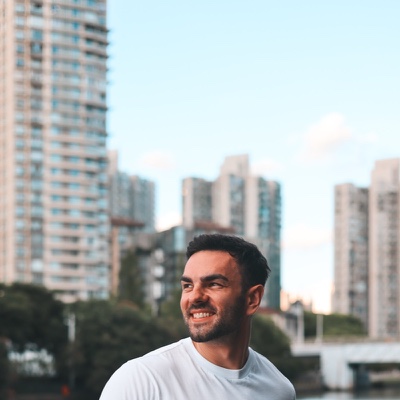
Michael Broza
Shanghai-based with a background in M&A and cross-border transactions. Michael brings the business and finance perspective to Asiabits, helping Western companies understand the operational realities of the Chinese market. Co-architect of the Asiabits platform and network.
You quit your job and came to China without knowing what you want to do here. Correct. You just knew you want to be here. For a lot of people, it's crazy. For me, it makes no sense to stay in Europe. After living here now for more than half a year, it's becoming harder and harder to think of missing all these things that make my life so convenient.
Right now the interesting thing is I have a lot of Chinese friends who said, "Oh, I would love to live in Germany because maybe it's too much for them. It's too intense." But for me, growing up in the countryside in Germany, it's like, "Oh, yeah. You can go. You can have my spot in Germany." For sure, 100%. Welcome to the Asia Bits podcast.
And today is a special episode because we want to talk a little bit about our founder story and what made you move from Germany to China. Yeah. Why I decided to come here and how the first months and weeks looked like when I came here. Yeah. There's everyone know that there's so much going on here in Asia when it comes to technology and innovation and this was also one of the reasons why we started the newsletter and this podcast.
So, if you want to know what's going on on technology innovation on a daily basis, subscribe to the newsletter, subscribe to this podcast, and give us a like. So, let's go.
Michael, we have a very successful series on LinkedIn. We created it for you. What's the hook of this series? I quit my job in Germany and moved to China.
And I don't know why, but it somehow really resonates with the audience on LinkedIn, right? Yeah. Especially now in this year or like last two years basically everybody is keeping their eye on China or in Asia in particular. Yeah. And it's crazy. I mean I've been living in China for 10 years now and it was a very rocky way to go.
So there was so much changes over the time like I got so much hate for just living in China and making videos about China, social media about China and now it really is cool again to make content about China. Right. Yeah. Especially I guess this year. Yeah. As I said last year, beginning with Deepseek, something just changed about the perception of how China is seen by the world.
And after that also, China opened the visa policy, right? And then it started to become more like a trend also for traveling. So you like lots of travel videos on Instagram or on other social media were popping up like crazy. Everybody was just coming to China to just finally explore how China really is. Right.
And before COVID there's a huge difference in the tourists I see here. When our office is close to city center Nanjing East Road and before COVID it was just these travel groups of old American 60 plus people, 20-30 of them coming there and now it's young couples, it's backpackers coming to China. Yeah that's a lot and I've seen so many people just going viral posting about technology and everything that's going on here in China.
And then I was in the tech industry as well. So I was always curious like what is really going on. So it's not just a hook that we write. It's the truth. That's true. Yeah.
You quit your job and came to China without knowing what you want to do here. Correct. You just knew you want to be here. Yeah. I actually had my first contact with China in I guess 2017 or 2018 when I came here the first time for like two weeks but it was mainly jumping from one factory to the other and one dinner to the other, less talking about business rather eating.
And it wasn't something like you really understand how the people live here but it was already a glimpse into what could business look like and how different it was compared to doing business in Europe or in Germany. Yeah, it is for sure. And I was actually thinking of what to do in the future. I was always - I love living in Shanghai.
I love living in Asia in general because the food here, the people, the way they approach life. Life is much more intensive in Asia. Oh, yeah. And this is maybe why the interesting thing is I have a lot of Chinese friends who said, "Oh, I would love to live in Germany." Because maybe it's too much for them. It's too intense.
But for me, growing up in the countryside in Germany, it's like, "Oh, yeah, you can go. You can have my spot in Germany." For sure. 100%. Yeah. I would never go back. No. Are you never going to go back. No, I don't. I can't really think of like living in a countryside. After living here now for more than half a year, it's becoming harder and harder to think of missing all these things that make my life so convenient right now.
Yeah. For you, I don't know. I know you now for like six months and it still feels like you're exploring so much new every single day. Even though you live here in Shanghai for 10 years, right? It's still like I don't know whenever you cross the street, you see something new. Yeah.
And I can really feel it in you as well like that this is something that you didn't expect. Yeah. Even though you know China speed, right? Yeah. And for me it makes so much sense that you say I quit my job in Germany and moved to China, but for a lot of people it's crazy.
For me it makes no sense to stay in Europe, you know. And everyone I have to say - everyone I talk to, not just people in China, people in Asia, they say like Europe is done. There's no hope. Yeah. We don't have to black paint it too much. There's still great people in Europe and a lot going on.
We have a startup community in Europe also. But all in all the big picture here in Asia, it's just like for me the most amazing continent to live in. Yeah. I'm coming from an entrepreneurial family myself. So I know also a lot of entrepreneurs in Germany and it's becoming harder and harder for a small company to survive.
That's why I wanted to see how actually the whole startup ecosystem works here in Asia. And I was traveling whenever I had the chance to go on vacation. I would always choose Asia over going somewhere in Europe because everything is so similar to what I've known, right? So I was always coming here to the Asian countries and it was always fascinating to me like how close all these countries are here together but how different they are which is something that is very unique in Asia.
And I posted a quite viral LinkedIn article earlier this year with the headline, "We are living in the Asian century and Europe is still ignoring it." Yeah. And this also resonated very much with my bubble mainly because my bubble lives in Asia but also a lot of people who are second-grade or third-grade connections.
Because the biggest problem is that there's so much happening in Asia whether it's China, Vietnam now or South Korea, Japan - maybe not so much, they're a little bit stuck - but there's so much happening and nobody in Europe knows about it. Yeah. And if you say nobody it's exaggerated but it feels like - and it's not that they don't know, they are not even interested.
They're not even curious what's happening here. Yeah, true. Most of my friends, they don't really ask what I'm actually doing here. Like they're not really interested. As you said, that's a sad thing. And it's suicide, you know. True. It's like from a business point of view, it's suicide. You have to know what's going on here.
Yeah. For me it was so hard when after the DeepSeek shock went viral in the media also because this was something that they can't really put down - what is actually happening here. And when things started to move into China right also with the trade war, China got a lot of attention. It was still super hard to get real information about what are the companies doing here, how are they doing it, and why do they succeed?
What is the big difference between companies in Asia? And what do they do so different that - I mean we have this GDP growth still at a high level like 5% every year. There is high growth still here in China. While this is not the case in Europe. Yeah. So it was very hard to keep up with the media or to understand what Asian people are doing differently.
Yeah. And the problem as I said - in Europe and we Germans so we can say it about Germany - it's like we are so Germany, so eurocentric that we think we are the navel of the world. So we think we are the center of the universe. But then you go to Asia and then you see DeepSeek. It's not just DeepSeek.
It's the e-commerce. When you talk about live streaming, when you talk about logistics, how they do it here in Asia, supply chain is crazy. Supply chain, it's unbelievable. We did live streaming with TikTok in Germany because they started doing this live shopping and for here it's so normal that you sell on social media.
We have this big - I also do these keynotes and workshops on social commerce in China. It's so common here and then you go to Germany and we did this live streaming booth and all the people passing by they say it's so crazy. They're selling products live on TikTok. And then you go - cars, right? EVs. It's like after COVID all the German car brand CEOs they came and said "wow in two years they overpassed us." BYD became a name. Yeah and this is not the peak, this is just the beginning. Yeah and it's moving crazy fast.
Yeah. So when we see what's happening here. As you said like I've been living here for 10 years but I'm astonished every day on the speed that is happening. And even like now that I do research about technology and innovation every day it's so crazy if you see the numbers - what the governments, the banks, the companies invest in future technologies here. As a German we have to be ashamed. And actually what is the most crucial part about is that they have a certain plan how they execute.
Yeah. So as a citizen in Asia, you can actually be sure that something in the background is structured. It has a certain plan. And that's why they execute fast because they split down whatever they have into a five-year goal, they split it down into different industries and then they just execute and support businesses, small entrepreneurs, solo entrepreneurs - they create this whole ecosystem so that people actually have the chance to contribute to the growth.
And it's not just China. China is a big player, right? And China gets a lot of attention also from the media because they love this China versus US story. But when we look at South Korea, we wrote about it last week, right? South Korea, they have actually the AI battle plan. They want to become one of the world's leading AI nations.
And they get all the players on board. They have the laws, they do the infrastructure, they even do the schools, right? Yeah. They incorporate future technologies, how to leverage the technology that you have right now, the access to it. They provide access to the people so that they can execute faster, iterate over certain things in a very high speed and get things done.
Yeah. And then we were talking about this. I heard about this in the news. The German government they are investing a ridiculous low number. It was like 18 billion euros over five years in six fields. Yeah. So it's about $3 billion US for AI in five years.
While the players like Samsung or also the US players, they will invest in the next year hundreds of billions. Which is crazy. And then I read about this - the German government also has like this delegation or whatever. They have this circle discussion where they will discuss and take a look at the world what they're doing and develop some recommendations.
And here we see like the last couple of years every government in this region is setting up funds for AI together with banks together with universities and together with companies so they can work together and develop it. Yeah, that's why after I came here it was becoming so clear to me that I have to stay here.
I wanted to come here just to explore how it might be. So I just wanted to take like maybe one year off and just see - in between switching jobs - I wanted to understand the market dynamics, what is really going on, and then see. But then yeah, China speed hit I guess. China speed.
So we met in an elevator and then you told me about the tool you built for yourself where you stay up to date on what's going on here. Yeah. Exactly. Because there was no clear media that was non-biased. Because it's a big problem also - they don't really report about the stuff that is actually going on here, or only on a surface level.
Or the stuff you are interested in. They report about politics and a lot about war. Yeah. German media loves this war rhetoric. Maybe it's our history. We love wars. So that's why I wanted to see if I can find something or at least information that would keep me up to date, right? But it was super hard.
So I went on LinkedIn and I was following those guys who were talking about what is going on in Asia, what is going on in China and I found some local newspapers also on the internet where I could use the information that would be interesting for me - technology, AI, finance related information, right? News.
So I wanted to gather all this information, filter what is important for me or interesting to me and then summarize it because I didn't want to spend half of my day reading through all these news. So that was the initial goal - just to keep myself updated when I'm here trying to network with people, attending meetings, and then having something to talk about that is interesting to myself.
And then we met and you told me about this tool you built for yourself. So it was practically a newsletter you built for yourself right? Correct. It was basically scraping automatically those sources I just mentioned and then summarizing it and sending it to my own inbox every morning so that I can just read through it whenever I wake up.
And I've been in the media business for 10 years also so I had friends from Germany after COVID coming to China for the first time and they were investors investing in future technologies - drones, low altitude economy, AI and so on. And they said there is a very obvious shift happening that before they were just investing in the US and then they started seeing competition coming out of China.
And then they started thinking maybe we also should invest in China. And then this investor friend told me that "Thomas there's so much happening here but we don't know anything - you have to write something because you are on the ground." And being on the ground is so important right now.
Right now we're here in Shenzhen. Shenzhen is two flight hours from Shanghai and the atmosphere here is so different. It's a completely different world. Yeah, completely different to Shanghai. So one lesson we have to say to our listeners is: if you see the "China experts" in Germany or wherever in the rest of the world, just delete them. Block them. Don't listen to them.
I see so much BS about what people on LinkedIn write about what's happening in Asia, it's unbelievable. So if you see "China expert" in somebody's biography, just - also like people say like oh the most important thing about doing business in China is how you hand the business card to people. Like this is maybe 25 years ago. Yeah 100%. Yeah. But people still pay a lot of money for these experts.
And then we decided we want to change that. Correct. There's a problem. The problem is so much happening here in Asia when it comes to technology and innovation and people in the west don't know about it. Yes. So we want to change it. Correct.
So we met in the elevator, went to the gym. I pitched the idea - it was not really an idea. I didn't have in mind creating a business out of it. It was just for me because there was a problem that I couldn't keep up with what is happening right now. So I wanted to have some filtered view on what actually matters to me and maybe also to the rest of my bubble.
So I wanted to change that. I pitched the idea to you and you said, "Oh, great. Let's do it. It's a great idea." I just had the discussion with the investor last week. Can we do it for a bigger audience? Because you were in the media. I didn't know you. So I was like, "Okay, yeah, why not? Let's try it."
Yeah. And I remember one question I asked you was, "How fast can we start?" True. Because I hate this talking. I've met so many people in my life who came to me because I know I've been doing social media for a long time and said, "Oh, I always want to do it." I always said, "Then just do it."
So I hate it like "Oh, I want to plan. I need to buy a camera." Nobody needs a camera. Everyone has a phone. You have internet. The only two things you need. You go on your phone, you film a video, you put it online. So that's why - I didn't know you either. So how fast can we start? And then like two weeks later we registered the company. Yeah, it was that easy.
Yeah, it is. It is easy. Yeah, actually it is just an easy thing. If you just commit to something, execute, do it - then on the way you will improve naturally. It's just, you know, find a way to just start. Yeah. And also like on the way now we met friends here who came to China from the US for example and they saw what's going on here and they said okay they just stayed here and started their own company.
Yeah and they do really high-class business - it's robotics, right? So it is possible - you just have to do it. Yeah, 100%. Yeah, I agree. But still sometimes it's quite frustrating. Being an entrepreneur is not that easy. But the good thing is like you also know like you have been working out for example for 15 years, right? So that's why we always say it is just like going to the gym.
It's always ups and downs. Sometimes your weight goes up, sometime your weight goes down. But in the end, you know, you will just keep on doing it. I lost 60 kilos and I know like sometimes you're not in the mood to go to the gym. You maybe gain some weight, gain some fat, but you know, you will never go back.
Yeah. I also always try to compare it with my whole gym journey. I mean I started the business also in 2017 or 2019 myself. That was when I came the first time to China and also my family background is the same - they are all entrepreneurs so I knew I wanted to build something my own. And just like going to the gym I knew it's not happening overnight.
And if it's happening overnight it's just maybe quick money and you don't know how to deal with it. So you have to have some long-term vision, long-term goal and then just trust the process. Yeah. And our long-term vision is to live in a world where knowledge, global knowledge flows without borders. Correct.
This is what we want. So what we can do is like we are on the ground, we live in China. We travel a lot to the other countries around China. And what we want is to find the experts, people on the ground, authentic people, people who know what's happening and who don't just want to tell you something to sound smart, right?
So that's why everything we write, we just try to write it in a way - or like doing this podcast - that we would talk with a friend, right? Not too formal otherwise it's just something that's very hard to digest. It should be easy. And we are not here to say that everything that has happened here is better, right? It's just - as you said - it's suicide. You should not ignore what is happening in Asia.
Yeah. Like I always want people to know they don't have to become China fanboys. Correct. Like I love to live here and it's a great life. But you cannot ignore China. You don't have to love it, but you have to understand what's going on here because there's no single future problem that we can solve without the Asian countries. I truly believe that.
Yeah. That's why I'm here. And all the technology and innovation is happening. And when we look at consumption power for example - the consumption power is also rising so high - so if you're a brand or if you're an investor or a political organization, you really have to understand. And once again going back to Germany - I really cannot understand why there's such a big ignorance in Germany when it comes to China. Like our German Chancellor hasn't even been here since he took office.
Yeah, that's a problem because most of the time I go back now and people ask me like "Aren't you afraid?" I was like why would I be afraid? Because - what they're saying about your data, all these cameras. Yeah. So what? Why should I be afraid? Is it because I want to commit some crime in China or what? Except that I feel safe. Super safe here.
I can literally go out to a cafe, leave my laptop there, go wherever I want and come back an hour later and it's still there. Nobody would even touch it. So sometimes it's very - I can't understand why they still think this way.
Yeah. And one big difference I find here in China is that Chinese people are so curious when they see me. I take a taxi for example and every time they will ask me "Where are you from?" Then I say Germany and say "Oh yeah, Germany, great country." They used to say that. So this changed a little bit. They will ask questions about Germany. How's life in Germany? Is it safe? What about the refugees? They love to talk about this topic, Chinese taxi drivers.
Well, even yesterday I was thinking about when we went to the restaurant and we were sitting outside and had the talk in Chinese with our guests, right? Yeah. And there was this guy standing next to us just listening to what you were saying - that you were so fluently speaking Chinese. He was fascinated.
And they are always like this. And sometimes I feel like it's still for you - even though you're very used to it because you went to so many places in China - you still find joy that people are really interested in you and very curious about you and so fascinated that you speak the language.
Yeah. That would never happen in Germany. I would even say it would be irritating. Yeah. If there's a Chinese person talking fluent German in Germany or in the west it would be like - yeah that's okay. Oh yeah. It's okay. And also the curiosity. This is one big difference and they really enjoy it here.
In Germany as I said - I've been living in China for 10 years - every time I come back and people there, even some people just saying it bluntly in my face "I would never go to China to visit you." Like what the heck, why would you even say that? And then everyone - I do a lot of workshops on business in China, e-commerce, social media in China.
And then we have these delegations. It's like business people, politicians coming here. I will always ask them a question. What is your impression of China or what do you think of China? And every single one of them will say "It's so different to what I imagined."
Yeah. And they have this imagination in their mind because if you just read the western media you would think - yeah now you see only this trade war, right? So they're in between something that they cannot even choose. So there's the US obviously trying to incorporate all these tariffs and then China. There's a big fight between these nations and Germany, even Europe, is sitting in between. They don't really know which side to choose.
And here's also one thing that really surprised me when I started doing the research when it comes to technology innovation and business here. There is no war going on in this. This is something that the media wants you to believe - that they hate each other. Chinese people hate American people. American people hate Chinese people.
But here we see American founders, startup founders from the Bay Area, from Silicon Valley coming here and seeing, wow, it's crazy what's going on here. So what they do - they take the best things from both countries: the software, the drive, the motivation, the people, the education from the US. Then they put it together with the Chinese speed, Chinese hardware, the Chinese ecosystem, and they build great products that actually can change the world.
Yeah, it's something that happens underneath all these headlines that you read. So this is what we want to try to discover and show to the world. There's much more cooperation. For example Pfizer buying Chinese medicine technology. And in medicine and in technology - cancer research - there's so much cooperation between the US and China. Stanford or Harvard professors investing in AI startups in China because they have the knowledge and the AI technology from China can help them to scale much faster.
Yeah, most of the Chinese startups also their goal is also to IPO in the US because they need global capital. Capital is still most available in the US. Most of the companies here obviously have a domestic strategy but most of them still choose when they found a company to have a global strategy. And this always includes that they will go to the NASDAQ ultimately or any other market outside of China.
So it's not that most of the companies are just looking at the domestic market. They are willing to move abroad and most of the time they choose the US. And when you look at the media articles - it's always black and white. These stories are so hard for them to put into their frame of black and white. Why would American founders go to China? Why do Chinese people still like America?
Yeah, because this is life. Life is gray, right? Life is not black and white. But it's so surprising for a lot of media and a lot of people. So what we really want to do is to show that there are so many shades of gray here and all over the world. Most of the people just want to live their normal lives. They want to have sustainable income. They want to be healthy. And they don't want to be part of this big war picture.
Yeah. And also develop in a way that they develop themselves, develop the business, they have to grow, right? How would you grow if you always stay in one market, in your comfort zone? It was the same for me - I felt stuck somehow, there was no perspective for me. So I was like okay I have to take some action because it's very easy to complain all the time and not do anything.
But in the end it turns out it's not actually that hard. It's actually also not hard to come to China. No. Right. I felt very well welcomed when I came here. The people actually wanted to help. It was so easy for me to network here. I never networked in Germany. I was living in Hamburg for 5 years and it was very hard for me to find Hamburg friends or create a network.
And now after 6 months being here I have a very huge network that I wouldn't have imagined before coming here. And these are high quality, high-profile people you can meet here. Oh yeah. And the thing I found out is that the people - maybe because we all don't live in our home countries - we all maybe need someone to support us somehow. We all have the same feeling that we are strangers here, right?
Yeah. So we made this networking dinner last week and it was very spontaneous. It was like 10 people - creative directors from Disney, startup founders, a head of HR from a German company. And it's unbelievable how willing everyone is to support each other.
Even when I reached out to the people on LinkedIn I had no reach before I came here - like 400 something contacts or whatever. But I reached out to the people and told them a story that I'm going to move or at least trying to explore the market. And they were actually very happy to hear about it.
So they wanted to share their contacts with me. Even though they don't know me or they might never have any mutual benefit from giving me their contact - they were actually willing to do so and they were so kind. And that was something I wasn't really expecting. And when I started with this it just kicked off and one contact led to the other.
Then attending the networking events - because in Shanghai there's basically one every day. So you can go to all these networking events and in a very short time you meet so many good people that really want to help because they are curious, they like what you do, they support your vision and they are in the same seat.
Yeah. And people are just generous. This is not something - I mean I've never been in a startup circle or big in networking in Germany - but this for me is unbelievable and I'm so grateful because you can meet people and you know they're genuinely willing to help you to succeed.
I have a lot of friends. We're in a similar business, but we haven't done any business for eight years. And then after year nine, we found out, okay, maybe there's an opportunity we can work together. But we're friends first, right? And this is what I really love.
So you quit your job in Germany and moved to China. How do you feel about it now? 6 months in. Yeah. Everything moves so fast. Something I didn't expect - as I said - I didn't really expect to be here after such a short time having a clear company structure. But it's still a journey. I love it and I love the food. Everything is so convenient here.
Especially living in Shanghai which is why I really like this whole environment to be there as an entrepreneur. Because you can really focus on the things that are super important for you and your business in order to develop yourself. Because for most of the annoying tasks there's a service for this which is very convenient.
Yeah. And we also have to say this is because there are so many people in China and such high competition - for a lot of people the salary is quite low. Although there's competition, for example in delivery - the big companies are fighting against each other which means that we as consumers can have very cheap food delivery. Because they're burning a lot of money. But yeah this is how life is.
I think in China for sure you can still have the "American dream." People here are really working so hard because they have to and this is also what keeps the country running. I guess work-life balance - I met a lot of people who have work life balance and home office and all this kind of stuff - but it didn't really take over so that it's becoming an absolute crucial requirement for all the companies in order to hire good talent.
Here they really have to work, they have to get things done. And this is something that I guess is like a very important engine to keep this country running. Yeah. And it's a big difference to let's say India for example. I went to India and I have to say - it was 2010 when I went there but I traveled through the country. And in a lot of villages, a lot of places you go there, there are men in the same age as us just sitting in the street the whole day not doing anything.
You know this is because of the societal structure in India - also a big problem. But there's so much resources, so much workforce that is unused. And this is not the case in China - everyone is working so hard. And especially here in Shenzhen - especially in Shenzhen, right - this is too much. So I'm a big fan of work hard, play hard.
You still should enjoy your life. But I also think it's coming - people are also realizing that it's also important to do fitness, to go out to the park, go hiking or whatever. Even though the trend is not yet fully here. It's not yet here but it will come. So for everyone who's interested in the fitness industry, the outdoor industry, the health industry - China is a huge market. There's so much potential.
Definitely if you copy whatever is working in the west it will eventually click and then you have a big big market. Yeah. Podcast for example - that's a thing in the west already for 10, 15 years. Huge thing in the west. And we're talking to platforms they were saying starting from next year they will start doing it.
So building the bridge or doing the business between the two worlds is really interesting. Because there are so many things that are much more advanced in China that you could bring to the west. And then the other way around - some trends, some things that are very popular in the west, they will come to China. But this means that you have to understand both of the worlds.
Yeah. Finding partners who are on the ground, talking to them, who are actually here. Yeah. And not the ones who used to be here 20 years ago. Stay away from the China experts.
I have to say it again. I get so triggered by these people on LinkedIn who post the China expertise. It's not even enough to come to China once a year. I mean it's a good thing to get an idea of what's happening here right. But then also choose wisely with whom you come here because we see these delegations and then they will bring people to the BYD store in a random shopping mall and then people say "wow they're so great" and they pay thousands of dollars for this experience.
Our idea is that sooner or later we should do a good delegation. Because also like we started doing our projects in Shenzhen maybe a month ago, right? Or the first time we came here was a month ago but it was for something completely different. And now like in one month the people we met - it's unbelievable.
Yeah, it's unbelievable. The young founders, the very established professors, the accelerators, universities. Yeah. And the insights that they give you, like what they share with you is actually so valuable. The moment we started, so many people were reaching out to us and having so many good ideas.
They have such a great network that they are willing to share with you. And you're like - what am I going to do with all this? Yeah. How do I structure myself and my company so that I'm not going in a completely wrong direction? It's so easy to lose track especially if you have so many opportunities.
Yeah. For me, the biggest risk is that I will die of a caffeine overdose because so many people want to drink coffee with me in exchange for their time. Like it's crazy. You really have to filter out who you can meet because we still have to build a business and we're trying to build a team. We are a startup so this is really becoming a luxury problem, right?
So you were doing social media for 10 years, right? But it was always centered around you as a person. Yeah. Not a very healthy business model. Yeah. So how does this - how do you see building now a product and also a company that is not only you as a person?
Oh, it is much more rewarding but much more frustrating also. Because with social media most of it is you're at the right place at the right time and you make a video and then people like it. So it's like very easy to scale. You just have to stick on it and if you're creative in a way and you have like the German endurance then it's very easy to succeed.
And this was also part of - yeah, it worked really well for me. But from a business perspective, it's not very healthy. If I would be an investor, I would never invest in social media personalities because then there's one scandal and you're gone, right? Yeah. So for me, this is really a new experience, but I enjoy every moment of it. Even the frustrating moments when sometimes you think you go like two steps ahead and then you go five steps backwards.
Yeah. You have a good run right until the end of the week and then on Friday something happens and you feel like what - I have to start all over again or at least it feels like it. But then you look back and we can look back only on a very short time and you feel like oh wow. The worst thing for me is to think "oh I have to do everything on my own."
It's very hard to find good people but I think this is something everyone struggles with and in the end we are the founders of this company and we always will be the ones who will be responsible for it. Nobody will save you. Yeah. Nobody will save you.
And let's go back to fitness. It's the same. It's like you just have to go to the gym. You have to show up and then you will lose weight. You eat clean and then it works. Don't wait for anyone to save you. It works and it's actually also so easy.
Most people also ask me like "how do I get a good workout buddy?" I was like I don't know - find it out yourself. You have to try. Everybody is completely different. There's no secret. The secret is stick to it, do it and go. Either you eat a lot or eat more than you burn and you gain weight, or you eat less than you burn and you lose weight. That's it. This is so simple. Just execute it.
Stick to your long-term or even short-term goal. I mean there's also something that you can achieve, right? But in the end it's just like don't lose focus. Find your direction. Either it's growing or losing something. It's that easy. Just do it. So this is something we try to adapt in our business as well. We see the long-term goal. We have our picture. We have our clear vision. And it's something that you don't achieve overnight.
No. No. And we try a lot of stuff - the same like in the gym you try a lot of different things. We see so many fancy exercises on Instagram with people who have a great shape. Everybody's trying to find the right exercise. That's it. That's the one that changes my physique overnight. Tomorrow I'll be looking perfect.
There's no hack. There's no hack. The one hack we have is that we do it in Asia. And I'm very happy - it's not just the work environment but it's as you said the food is amazing, the price-value. I mean in the US you also have really good food, right? Because American people very obviously love to eat. But the prices here and the variety is more important, right? It doesn't get boring.
No. Just today for lunch we just went out and found a random restaurant and it was amazing. Beijing duck. That's something that you would pay so much for in other places. Like it would be like a super exciting date anywhere else. For us it was a work lunch. And we paid $15 per person. This is so crazy. Yeah.
So, we're very excited about this. This is just the beginning. We have so many crazy guests, people who share their stories with us. It's like for me it's always mindblowing what's happening here and the speed that things move. Very good timing right now also - people are really willing to build something.
There are good people here - exceptional minds. They have such a great background and especially their network is impressive. Because as we said they are really willing to share their networks with each other. And that's why we both decided to do this podcast in English even if our German accent - especially mine - is very strong. It's just very simple English we can use but we really want to reach a lot of people because people have to know what's going on.
And also our guests say the same - for some Chinese entrepreneurs it's very hard to express themselves in English but they do and I think it's beautiful. They do a great job. They do a great job and I found out like people in the US are very tolerant and very open because it's a country where a lot of foreigners live whose native language is not English. And they are very open to it.
The most judgy people are the Chinese and the Germans talking about other Germans' English. So yeah, I'm very excited. Yeah, me too. Just like we said, we just wanted to start even though it's not perfect - it would never be perfect. So we just want to make it as authentic as possible, right?
Yeah. With one vision - to let people in the west know what's going on in Asia, make them give an impression on how our lives are here, how business is here. For investors if they want to invest money here, people who want to do business here. And yeah - one goal is to bring the people together, help them do good business, make money and improve this world.
Exactly. Just like most of the founders we interviewed now said to us - the most valuable thing is: bring people together, make them happy and then solve their problems. It's not like "I want to be crazy rich." But in the end if you serve people's problems - if you solve people's problems - then you're creating a better world and we want to be part of that.
We want to give them the stage to actually tell the people out there what are they doing - what is the next thing coming up from China, from Asia. And this is actually what quite a few people said to me. The first one was my investor friend from Germany who said "I want you to show me the next DeepSeek." And then yesterday people said "oh maybe in your podcast we will find the next Elon Musk."
Yeah. Right. You never know. So, you never know. It's all young people, all very innovative people and very hardworking people. And I'm sure with all the friends we make sooner or later we will see the next Elon Musk, the next genius here from China, from Asia, from different countries, different places here.
Yeah. And then we have them on our WeChat. Yeah. Then we are good friends. We don't need their business card, right? We don't need the business card. So, last reminder: stay away from the China experts. Okay. Very looking forward to where this journey is going. Yeah. Me too.


Get These Insights
Every Monday
Join 18,000+ professionals who stay ahead with Asiabits. Every Monday, straight from Shanghai.