
- Sean comes from Zibo, China's BBQ capital - he knows grilling better than anyone. Barbecue culture is in his DNA.
- The Lumo grill uses 70% infrared + 30% hot air - no smoke, Michelin-level results. Infrared heaters on the sides mean oil drips into a cold zone, eliminating smoke entirely.
- AI controls the temperature automatically - cameras measure meat size and thickness, infrared sensors read food temperature, and a scale measures weight. You just put the food on.
- An investor literally ate the food and invested right there. Sean pitched investors by cooking for them. No pitch deck needed - the meat was the presentation.
- Kickstarter launch planned to bring Chinese grill tech to Western markets. Target: $299-329 on Kickstarter, $499 retail. Goal: $1 million.
From Zibo to Shenzhen: A BBQ Founder's Journey
Sean comes from Zibo in Shandong province - a city so famous for barbecue that it went viral across China. Growing up there, barbecue wasn't just food. It was culture, community, and social connection. As Sean puts it: "Eating is not the most important thing, but communicating with others is."
That insight became the foundation for Cozytime. Sean noticed a fundamental problem: most people now live in apartments, especially in cities across China, Singapore, New York, and beyond. They remember the barbecue experiences from their childhood - but they can't recreate them indoors. Smoke alarms go off. Neighbors complain. The experience is lost.
"An investor tried the grill and decided to invest on the spot."
The Technology: Why 70% Infrared Changes Everything
Sean's engineering background led him to a crucial discovery. When you hold your hand near charcoal, you feel heat from the top and the sides. About 70% of that heat comes from infrared radiation, not hot air. That's why air fryers never quite taste like real grilling - they rely on convection (hot air), not radiation.
The Lumo grill places infrared heaters on the sides of the cooking chamber, not underneath the food. This means oil drips down into a cold zone rather than onto a hot surface - eliminating smoke entirely. Aluminum reflectors distribute the infrared evenly across the cooking area.
"The meat is our PPT."
Sean on how he pitches investors: cook for them, let the product speak for itself.
The Investor Who Ate and Invested
Perhaps the most memorable moment in the episode: Sean describes how he pitched Chinese investors. No PowerPoint. No financial projections. He cooked meat on the Lumo grill and let them taste it. One investor brought a guest, they both tried the food, and the investor decided to back the project right there at the table.
As Thomas and Michael joked on the show: "You don't even need a pitch deck with this product." Sean's response: "The meat and the machine are our presentation."
Building Hardware in Shenzhen's Ecosystem
Sean's journey to building the Lumo grill showcases the power of China's manufacturing ecosystem. When he needed a stainless steel pot component, factories in Shenzhen and Dongguan quoted 100,000 RMB for the mold. But Sean kept thinking - and found a specialized "Steel Town" in Chaozhou (Guangdong) where the same mold cost just 20,000 RMB. That's 80% savings by finding the right manufacturing cluster.
The grill has three modes: a mini oven mode (closed), a fast grill mode, and a wide-open 180-degree party mode for larger groups. It features two independently controllable cooking zones with separate temperature settings, a side-mounted warming tray for fondue or keeping food hot, and a wood chip compartment that adds cherry wood or other smoky flavors without actual smoke.
InnoX Academy and the DJI Connection
Sean's path to entrepreneurship led through InnoX Academy - an accelerator founded by Li Zexiang, the same professor who mentored DJI founder Frank Wang. Sean first fell in love with DJI products when his father gifted him a drone upon starting college. Through a classmate connection to DJI's campus programs, he discovered InnoX.
The academy connected Sean with like-minded founders, provided office space near DJI's headquarters in Shenzhen, and gave him access to mentors and funding. But the most valuable thing, according to Sean, was being surrounded by people who believed they could build something meaningful.
Kickstarter Strategy: From China to the World
Sean did his market research the old-fashioned way: he went to bars in Shekou (Shenzhen's expat district) and offered foreigners grilled meat. The feedback was direct and invaluable. Americans wanted bigger portions - the initial Chinese-market-sized prototype was too small. Sean iterated, making the cooking area larger and adding the fold-open design.
The Kickstarter pricing strategy reflects a long-term vision. At $299-329 (with a retail target of $499), the goal isn't just revenue - it's data. More users means more cooking data, which feeds back into the AI model. Sean compares it to Tesla's approach: make the product accessible so users generate the data that makes the next version even better.
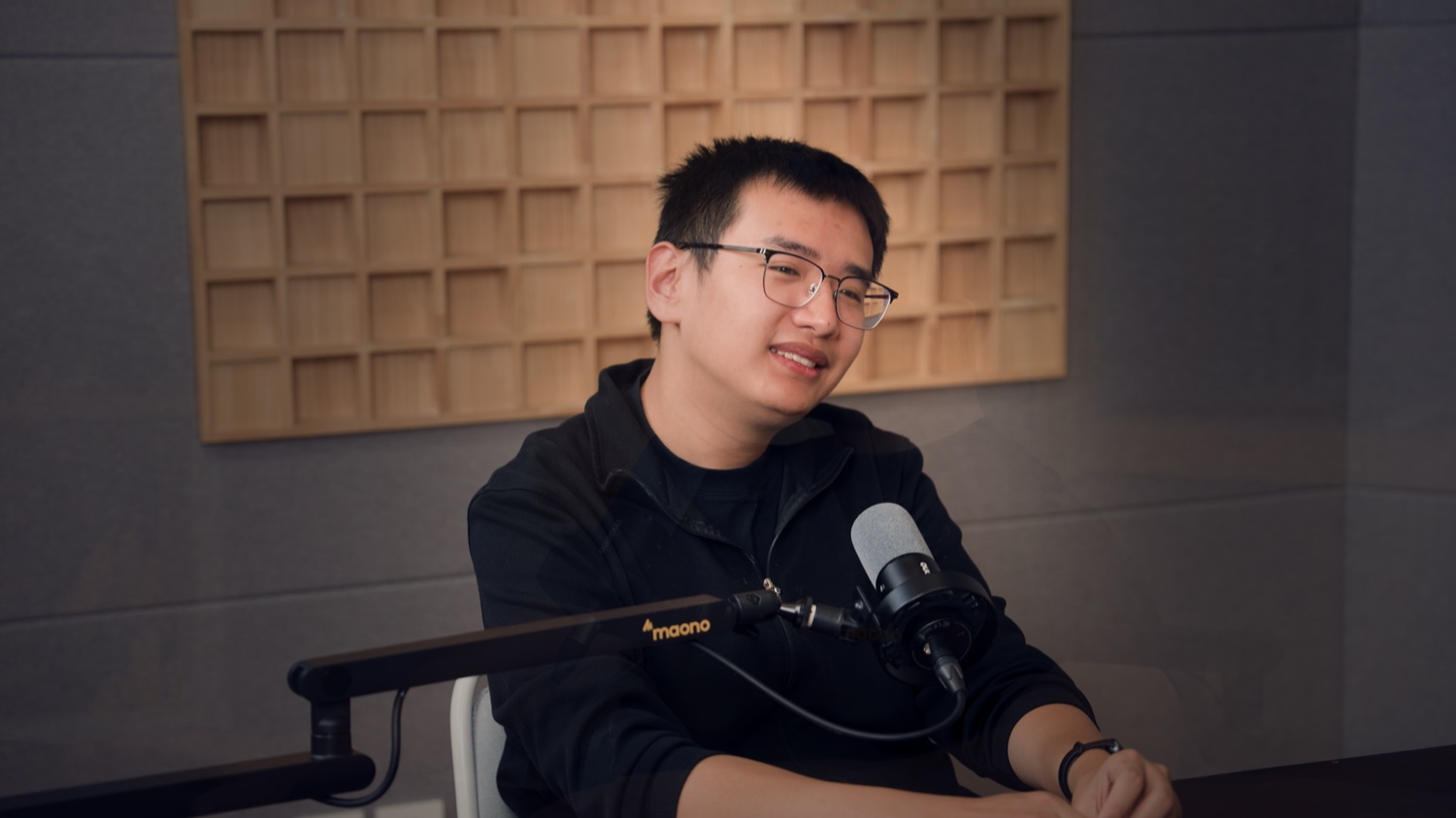
Sean
From Zibo (Shandong) - China's BBQ Capital. Structural engineer turned entrepreneur. Building the Lumo AI-powered infrared grill that eliminates smoke while delivering Michelin-level flavor. The grill uses 70% infrared + 30% hot air from charcoal, with AI temperature control via cameras, infrared sensors, and weight measurement. InnoX Academy alumnus (the accelerator founded by DJI's Li Zexiang). Preparing Kickstarter launch to bring Chinese grill innovation to Western markets.
It's amazing. So good. And also what I love the most is the feeling that it's Like a charcoal edge. Yeah, Charcoal edge. This product will change the world. And I already have it, part of it in my stomach, So I really love it. The most interesting thing is it's not just that we are very, Very happy with this. You got some investors, How did you pitch this to them? Did you also cook the meat?
Yeah, yeah, we all did. Yeah. And then the Chinese investor here, take my money. Welcome to the asiabits podcast. In today's episode, we have a really cool product, And we loved it because both of us are big eaters, As you obviously can see, and. Yeah. What is the product, Michael? The product is a grill, basically, for everyone's home. Yeah. But not any grill like this, like the one grill.
The grills that you know already. Yeah, it's an amazing product. And we have Sean here. He is the founder. And one thing I want to say, he was very nervous because. Because he says his English is not that good, But we both are Germans. And as you can hear from our accent, Our English is also not so good. But our goal is to close the gap,
To show everyone what's happening here in Asia so people all over The world can. Can learn from it. And we want to spark innovation all over the world. So please be nice to Sean. I think he did a really great job. And the product he has is. Is amazing. We are the first customers, And if you want to know what's going on Regarding technology and innovation in Asia, subscribe to asiabits.
We will deliver the newest developments into your inbox every Monday to Friday in under five minutes. It's for free. And it's the best newsletter on this planet. Right, Michael? Of course, because we write it. So subscribe to asiabits and let's go and meet Sean. So, Sean, you are from China's most famous barbecue city, Is that Yeah, it's in Chaozhou in Guangdong province in China.
We have to say eating and food is not just about getting Stuff in your stomach. It's also about culture, social. Social gathering. People want to be together. Not for. I always complain when. When we. When we were thinking about what can we eat today? And then, oh, yeah, maybe. Maybe we should go for a burger. And I was like, burger? But then you eat a burger for, like,
I don't know, two minutes, then you're done. Right. And what's next? Yeah, so it's very. It's a very good way to interact with people, To sit together. On the table and to be together for a longer time. Yeah. Eating is not the most important thing, but communicating with others is. It can give you a good environment. And the. It can give good environmental.
And actually when we go to dinner with some friends from abroad, When they come to visit us, and then they said, So I want to order this dish. And we think like, what the heck, we're in China. We have to share food. Yeah. Everything on the table. And someone. Most of the time you are responsible for ordering for everyone. And then you just trust. Yeah, I'm very good at ordering.
I know we're both very good eaters. So. I remember in Europe there is cheese fondue. Yeah. Fondue. Yeah, yeah, Because because of these things, our products has a special function to Make you able to do fondue, or you can also do fondue. Yeah. In one machine. Not too much traditional fondue. Like, you need a grill to heat the food and another pot to heat the cheese. To heat the cheese.
But in our machine, two things can be in one machine. Is it something like. It's something like a raclette grill. Right. So this is something we Germans also like to do a lot. Now it's like New Year's Eve very soon. So New Year's Eve, usually we also sit together with friends and Do this raclette and have this grill in the middle of the Table. Is it something like that?
Yeah, yeah, something like that. Yeah. So in. We have to say like in maybe in a half an hour Or something. We will also put the grill here so we can show not Just tell you what we are. What we are doing like and what. What you. How you manage to get the people together with good food. Right? And it already smells very nice in this studio. So we already have the. The smell of cherry wood. It's.
It's in your genes. So you're from Chaozhou. So barbecue is in your genes. So barbecue is in your genes. It's part of your genes. Right. You go there barbecue at least once a week. And as you said, the biggest difference is that in. In the west, in the US or in Europe, Most of the barbecue happens outdoors. Yeah. But nowadays people live in cities, everything happens in flats. Right.
So when did you have the idea that you want to build Something like a business to make a smart barbecue grill for indoors? Yeah. Many people live in apartments. Especially in China. Yes, especially in China. But also in New York, Canada, also some cities, Singapore, also many people live in apartments. One thing is that although they live in apartments, they remember the barbecue.
But they remember the barbecue. Outdoor barbecue experiences when they were a child or with friends. These memories were beautiful. And they want to have the same feeling. Same feeling. But actually in the apartment it's a little difficult to do these Things. We also meet that if some smoke in your apartment. The alarm goes off. It's an expensive fine to pay for it. It is.
So how to do a barbecue indoors. Many people want to do. But they don't have a truly useful tool to do this. So we want to do our Lumo. Why are our products called Lumo? Because we want to think Lumo can mean light up more. Light up more. Oh yeah. Okay. Light up more. More people's life. More people remember barbecue. More people can taste it. Yeah. It's a very good vision.
And I feel like it's a Chinese. Vision to experience it more often, you know. Most of the time. I did barbecue also on my balcony. I have a very small balcony, but a very big barbecue. And it's very annoying just to heat it up all the time And then do this. Yeah. Barbecue fees. So I do it very rarely. Yeah. And with your product you can do you have the entire experience Right in your living room.
Basically without smoking. Right. To like grilling big, big chunks of beef. Right? Yeah. That's amazing. So. So no smoke is the first thing you should have to do barbecue indoors. The second thing is you want to do these things more convenient, More easily. But not like outdoor. Outdoor is just too... But Lumo or our product is like the one to have Good memories and a good environment.
So we need to add some other functions to solve the trouble. Like you don't know how to control your fire. Control your fire. Yeah. And don't know how long the time should be. And you also use. Use the probe to know the food temperature. The food temperature. So it's not very convenient. These things are needed to do barbecue. You must do these things when you do barbecue. Yes.
But actually these things don't give you a good Memories. But the best memory is you cut down a piece of meat and share with your friends. Share with your friends. Look, it's good. I do. So we just want to help people to Solve all those troubles. But remain the best things for people.
So we added an AI function that can know the meat temperature, the size, the weight, and it can control the meat at the right time and the right temperature. Temperature, the size, the weight, and it can control the meat at the right time and the right temperature. Meat in a good time in a good temperature. Because our power is from electricity. Electricity is very, very easy to be controlled.
It's like an electric car, different from oil. So you have a lot of sensors in the Device that is measuring the temperature and the. The size of the meat. Because it's also getting smaller and smaller. Right. And during the process. Yeah, yeah, yeah, So so the. The camera can know the size. You have a camera inside. The camera can know the process.
Okay, so how does you were talking about AI like everyone is Talking about AI because then you can raise more money from investors. Investors. If you, if you talk about AI. But how do you actually use AI in the. In the oven, in the grill? Yeah. Why use AI? Because everyone's taste is different and there are so many kinds of meat. How many kind of meat. So we also say that to do a good food is like
To do a self-driving car. Self-driving car. So it's a little different. But actually we use many data to know how the people do And we also know the meat, the differences in the process. And I think we can do a good result. So you used a lot of data from different Types of meat and everything you could think of that you can Grill basically in order to train the model that you're using? Yeah.
So we do about. At least until today, we do at least 100 kilograms of meat to collect the data. So our office. Our oath. Yes. So our office always eats meat. Will it work? Try it, try it, try it. No, no, no, no, no. I want to try it. Yeah. So you collect the data yourself. But the best is we are in InnoX. Our teams, our other teams, our teachers, our Friends. We can share with them to test out.
Yeah. Also built a group to remind everyone who thinks the meat is good. Is good. So are you still looking for people to work with you? What kind of people do you need most for doing this kind Of product? Engineers or. Yeah, we need the best engineers to do the best products. Yeah. Because the product is also being created by best people And other things.
We also need some data people need to know how to cook Meat and how to collect the data. And we also. It's very. The first time I heard the sense we need data people to Know how to cook the meat. It's a very Chinese thing to say. I would say. Yeah, So are you an engineer yourself? Yeah, I'm also an engineer. I'm the structural engineer to do the machine. Okay. Yeah, yeah, yeah,
It's a very different thing. So we called it a grill. But actually it has three modes. The first mode is like mini oven. The second mode is fast grill. The third mode is wide. It can open 180 degrees for more people to eat the meat. For more people to eat the meat. Yeah. Okay But actually it's very.
It's just too cool because that transformer system to change modes is very small and very interesting. It's very small and very interesting. Afterwards we can see the machine. See the machine. Yeah. So you founded the company yourself? No, we founded this company with three people. I'm the co founder. Yeah, the founder from Ningxia province. Yeah, Ningxia eats the sheep, do the barbecue.
Oh, that's another combination. So we have one guy from. One guy from Ningxia doing smart barbecue grills. Both engineers. Yeah, both engineers. You see it? Look, this will be. And the other one is the data collector that is just eating. I want to be a data collector. So this product will be huge. I think you can do IPO in two or three years. What do you think? Ipo? I say IPO is far, far away.
Far away. But I think the best products for people to make everyone have The best table time is most important. IPO is not. That's a very good vision. Yeah. So back to my first question. Like I grew up in a very normal German family and for Us it was always after you university or after high school you After university or after high school you go to work for someone else.
But you said after you did your engineering degree you want to Go and build your own product. So when did you first have the idea to say you want To found your own company? All in all, from my heart, when I was in my senior high school, I would do some trade, buy some treats with my classmates.
I would do some trade, buy some treats with my classmates, and I think maybe I can do some big and different things. I think maybe I can do some big and different things. Okay. So I went to do a startup business first. In. First. I also don't know which product I should do. But when you find the. When I went to do camping with my friends, I found the barbecue. And I find the barbecue.
The barbecue project is the most interesting thing around the camp. So I think this interesting thing should be brought back. So we did this product and within a long time of doing this product, we found many interesting things. This product, we found many interesting things. Actually I can ask a question, but which option do you think? So does the meat get heated by the hot air or by
The infrared from the charcoal? Right? I can explain. I mean. I mean I think I know the. Answer probably from the. I read the material like what is the most. The most distinguished feature of your grill? It's like you heat the meat with infrared, Right? Yeah, Actually about. We test some. We found that actually about 30% comes from hot air, but actually 70% from the infrared.
But actually 70% from the infrared. Oh, I can. I can explain. If you use your hand near the charcoal on the top, You feel it's hot. Yeah, On the side you also feel the. Also the heat. But we think if the charcoal hits the air, Actually the air will go around and you can't feel the heat On the side. But actually the infrared can shoot all around. So the most important thing is the infrared ray.
So it covers a bigger area. So we think the air fryer is not the best way to Do the meat because actually what really cooks meat is infrared. But the air fryer should be also the same to Heat the air, the hot air to cook the meat. So many people do use the airfryer to cook beef to cook steak and found that it's not that tasty. So now I get it. Like air fryer for sure.
It heats the air and then it heats the meat or whatever's Inside. Yeah, an air fryer uses a fan to make the hot air circulate around The meat. Yeah, yeah, uses most of the power to heat the air and the fan makes the Air around the meat. Yeah, it's so, so easy. And like most ovens, you find if you want to cook meat, you should preheat the oven for about
10 minutes or 5 minutes or 8 minutes to prepare to make the whole oven up to a certain temperature. It needs a long time. Yeah. Because the oven also uses most of the power to heat all the air and make all the air reach that temperature. Actually, still air is not good. It's very difficult to make the whole temperature even. It's the same. So why not just use infrared? Oh, okay.
So and then you have the idea, you see from the charcoal, 70% of the heat comes from the infrared. Yeah. And how do you start then? Like where do you go to say we want to build An infrared grill? You go, you just call someone from the factory and say we Need this or how do you do this? No, no, no, no. We know that if you Most people put the charcoal under the meat. The meat has some oil.
Oil will drop on the charcoal. The charcoal temperature is very, very high. So the smoke from oil can burn. Make some smoke. But we found that infrared is the most efficient. Infrared is the light. Light can be controlled or light can be directed like when we Not. So we can put some infrared heater on the side, Not underneath. So the oil can be dropped into a cold area. So there's no smoke. Yeah,
So that's why there's no smoke. Yeah. Okay. So we can use these things to make the barbecue. This can be done indoors. Yeah. Infrared heaters can also be controlled easily. So we can make some aluminum. Aluminum can reflect the infrared in your cooking area very evenly. So it's very even. Hot grill. Okay. And then we also find that the charcoal You can't put the charcoal on the top of the meat.
So you always need to make the meat Turn around, turn around, turn around, turn around. But infrared, because infrared can be made electrically, Also electrical. So you can put the infrared heater on the top and on the bottom so the meat in the middle can be heated all Around. Actually, I just remembered one video I always see from Inner Mongolia, Also a province of China.
So they do something that is called shitou kaorou. So they do something called shitou kaoru. So what they do, they have this pot and then they put Some meat on the ground and then they have this very hot Stones, the preheated hot stones. And then they put the stones on and then again some potatoes And other stuff, veggies, and then some more meat. And then also the stones are in between the meat.
So does it also work the same way that it cooks evenly and the infrared also comes from Actually it has a big difference because the hot stone maybe use. We call that the heat. The heat transfer has 3 mode. The heat transfer has three modes. The heat transfer has three modes. The first is conduction, like touch. The second mode is convection, by air. By air. Okay.
The third mode is radiation, by light, like infrared. The stone barbecue uses mostly the first mode. Is the first. Is the first by touch. By touch. Okay. Yeah. You know, like from our stupid questions, you know, We're not engineers, we're barbecue experts. This is the best. We can say infrared is the best way to cook the Man. So why aren't there any competitors on the market? Why are you
How did you do the market Market research basically. For your product? Yeah, actually because of our company ethos, we wanted to find some American and Canadian people to do our To do our research. So we did some research in Shekou. Shekou has many foreigners in Shenzhen. Oh, it's a part of Shenzhen? Yeah, it's a district of Shenzhen. So you go on the streets and then you see a foreigner
And then you said, do you want to eat my meat? How do you find them? Yeah, it's a little like an exhibition. You have a good meat and a good smell. Yeah, it seems like this. Yeah. So there are some bars. So we went to some bars. And do you want to try our meat? Yeah, sure. It tastes good. Or do you want to know our machine how to do this? Yeah, we show the indoor and AI. Yeah, very interesting.
And when they had a party, like Sean, our birthday party, I think I need your machine to do some meat. Yeah, it's a good way. Yeah, yeah. Awesome, awesome. That's very funny because when you think of a technical product, You would think like the engineers are just sitting in the factory The whole day and doing something. But then Sean has to go to this bar where all the
Foreigners are to find the first customers. Right? They find more customers. Yeah, It's a very good approach just to, you know, Go out and talk to the people actually you want to satisfy. Right? So there's definitely a product market fit. So what was their feedback? The people from the bars, what did they say? Yeah, because our products as the first time, Because I'm Asian, I'm Chinese.
So we thought the machine should To do. cook skewers. But American people don't do this. They do a piece of meat. Yeah. The first prototype many people said So it's very different. With the first prototype, many people said... It's so small. What can this do? Yeah, because they need it for half a cow. Yeah. So we made the machine bigger, bigger, Bigger.
And one time they saw that not only is it bigger, but it Can be opened to the double area. Oh, this is a good, good. How big was the first prototype and how did you do? We call this. Paper? Yeah, because A four paper. Yeah, it's like for four people. Maybe for four people. The best is a good choice for Japanese people. But for American people, it's A3. Yeah. A3 is bigger. No, it's bigger.
Really? F4. A 5. No, E3 is bigger than a 4. Okay. The a 5 is half of a. Oh, yeah, sure. Yeah, yeah, Actually when it open is like more and bigger. E3. Yeah, Okay, so now it's a three size. Yeah, a three size. So and we. You were talking about Innox already and we have to explain it. This is kind of an accelerator. Like it's a academy that helps young entrepreneurs like you here in
Shenzhen to develop their products to find investors, To. Find your co-founder. Also find co-founders. Find co-founders. Right. So how. How did you. And you have to apply to go in there, Right? Yeah, I think they told us the numbers. It's like thousands and thousands of people apply to go inside, But just a few get selected, Yeah. So how was the process? How was the process?
How did you know them and how was the application? Okay, because of our... Do you know... Dji? Yeah, DJI. Everyone knows dji. Yeah, everyone knows DJI. Yeah, so it's actually the. The founder. The founder of DJI. Yeah, yeah, yeah, The founder of DJI is also the founder of... InnoX, okay. Yeah, yeah. When I finished senior high school, when I went to Wuhan, to go to college, my father said,
Which gift do you want? Do you want a new phone? It's not good. I said maybe a DJI, a DJI drone. Yeah, so the first time was about 2019. 2019, 2020. When I was 19, I first touched a DJI product. I thought, wow, amazing! The world is so different and so delicate and it's difficult to see such interesting Products. Yeah, it's one of the best products. Amazing. Yeah yeah, amazing.
And then my colleague had a classmate at DJI because the founder of DJI, Li Zexiang, became this classmate's teacher at Wuhan University. So you have like a DJI campus? Li Zexiang made a DJI campus. I went to this campus and I learned about DJI, I learned about hardware in Shenzhen, some startup businesses about these things, and in our college at that time we also had some different lessons,
between the college classes. Like, every team would do a project, a real project, a fighting product. It's very similar like at Olin College. College. Yeah, it's very similar to doing the product by ourselves, by our team, and at this time we learned about InnoX. Around 2024, Li Zexiang built the... You know, so it was a DJI campus but it hosted something like, From Innox.
basically from DJI, so InnoX was just built in 2024. So they. They just started. DJI has many campus programs like RoboMaster. So the goal is. To find talent like. Like you or find engineers and support. Them, right? Yeah, find people who can do, who can do the real... A product and then you have said okay, I want to do my own product I want to found my
Own company and then you said okay, I will go to this Academy founded by the DJI founder, right, InnoX. So you had the how did you apply for Being supported or joining InnoX? InnoX oh because. It was just like it happened. Yeah Like happened very easily, very naturally. Yeah, because I liked DJI so I went to this DJI campus, and, you know, I worked with the DJI company and I also wanted
to do something to, you know, change the world. Yeah, and actually barbecue changes the world. It's a much better product. It is also changing things. Yeah, it's changing the mood, changing... You can do barbecue indoors conveniently and easily. It does change things. Yeah, it's a much better product than a drone. I don't need A drone. I need a barbecue. Yeah. Okay, And how do they support you?
Like we know in Shenzhen, it's like DJI comes from Shenzhen. And actually the DJI headquarters are very close to your headquarters. Right. Where you work now? So how do they support you? They give you money, they give you funding, They give you office space, they give you also mentors, Right, People who support you. InnoX. The most important is they find similar people.
Similar people, because while in college, you do something, You say, I want to change the world. You. No, no, no, he wants to eat barbecue. He doesn't want to change the world. Yeah, yeah, So the similar people can, can help, can communicate, Can do something different. Yeah. You said every place can give you money, office space, funding, to do these things, to cook food More easily convenient.
So what kind of people work there? Do you feel like when I went there, I felt really stupid because all the smart people and they're all Very young. I mean you were born 2000, Yeah, So what kind of people did you meet there that you said that really inspired you or that you said, they're very smart and very Oh, because besides many DJI companions, engineer companions,
many other people who can, who can, you know, actually do, Something, make something happen and make something successful. So these things make us also believe that what we're doing can be successful. And we also think, you decide for yourself. You can be sure if you work hard and always think and do the right things, you can change yourself and be realistic. Yeah, that's very interesting.
We're talking about this the whole day, every day. So when you have the right mindset, when you want to change The world, you actually can, You just. There's just one, one way to success. Just do it, do it. Yeah. The most important is to keep, Keep thinking. Keep thinking. Yeah, keep thinking, keep thinking. Yeah. Asking asking people, What do you think? Go to the bars, ask the Americans.
Keep thinking can make you do the right things. Yeah, yeah, But how do you keep thinking? Do you like work from. From Monday to Friday, then weekends you take off and you go Hiking or do something or when can you think the best? Oh, think the best. Our our product has. Has a pot. The pot needs to be easy to clean and then can be taken Off from the machine.
It can be washed easily. First, we found many factories to make this part in Shenzhen and Dongguan. But everyone said, told me this is not an easy thing. It's hard to do and it costs a lot of money. They told me about do these things. You need a model about 100,000. 100,000 RMB to make this mold. 100,000 RMB? Yeah. Okay. It's very expensive. Yeah.
But we found that Shenzhen and Dongguan maybe were not the best choice because our pot is made of stainless steel. Okay. Stainless steel. Stainless steel or stainless steel. Yeah. In China there's a... there's a... Has a town called the Steel Town. The Steel Town. Yeah. Steel Town. We found this town is in Chaozhou. Yeah. We found the hometown and there we found that for this
Port Mode only need 20,000. Pot mold only needs 20,000. It's about 20%. Yeah. of the price here. 20%, only 20%? Or 20%? Yeah, okay. 100,000. 100,000, 20%. Wow. That's crazy. Yeah, it's. It's a. Keep thinking, you should find the... Because why should we trust Chaozhou? Because they always do these things and the whole town, people all do these things,
and they have many skills and many ways to cut costs, To do the things. So it's the best choice for us, and Everyone knows that Dongguan is the world's factory. But for some special details and other things, Dongguan is not the best. Maybe it's another city. Now we have a big problem because it smells so good here And we cannot show it to. We can show it to the people.
But do you think there will be a technique one day where You can smell stuff on a video or on a podcast? I think maybe, because we can do that, because We want to show our products can do that. Yeah. You have to invent this. Yeah. Maybe no one has done this, we can do this. This will actually change the world. Yeah. Yeah. It smells like cherry wood. It's so good.
So you did this beef shank yourself, Yeah, Yesterday evening. Yesterday evening, But today. I cooked this yesterday so I can make some today. Mustard. Mustard, pepper and salt to have some tasting. So now we have a very nice oven here in the middle Of us. And yeah, it looks a little bit like an oven you have At home. But the thing is, you can open it. Yeah. And you can use both sides of it.
Yeah, both sides have four infrared units and you can use the Four units together. So you have from above and from below You cook the meat. Or you can use two units separately. And makes infrared ray around the meat. Can do it very quickly and fast. And the product we see here now it's a prototype. So it's not in mass production. Now. Yeah, But the function and the idea is similar to
The final product. The final product. And what is the plan now? The plan is to start a Kickstarter in February, End of February 2026. Yeah. Our plan is that at the beginning of February we will go To Las Vegas to attend the CES exhibition To know. To let more media and potential customers know about our product. And at the end of February we will launch Kickstarter for our crowdfunding product.
And the media and potential customers can become backers on Kickstarter. Believe us and our grill product. And. So you already have your first two customers. We definitely believe in you. Yeah. Let's test it. Let's test it today. Yes. Okay, so now we have. Can you, can you describe the oven from the front? How does it look, Michael? What do you see? It's a, it's a display right in.
The front you have a display with one Button. Yeah, so we, we just turn it on so we can hear The sound of the ventilation. Right now I think this is from. The, from the sound. It's not very loud. It's not very loud. No, no. And we have really good microphones here. So. So now we open it. So we actually have two parts and a very beautiful piece of Meat here. So I wonder how long this took. Yeah.
So this product looks like this. You have two parts and then you have a basin there and Then you have a net where you put the meat or the Food. You wanna, you wanna do it. And then you have the oil. And the oil Yes. And because the units, the infrared units are on the sides and Not on the ground, so there will be no smoke from the, From this. Beautiful. Yeah. That'S very minimalistic.
You basically have only two buttons in this entire Device. One is basically, basically allowing you to adjust the temperature, Right? Yes. When you can adjust the temperature for both sides or you can Do it separately. So what we. Well, what's very interesting is that these two units you can use Separately, You also can separately, separately set the temperature of each unit, Right? Yes, yes.
So you could, for example, do some meat here and What could you do here? You can do meat here and you can do bread or do Vegetables, because vegetable and meat need a different temperature. And then here's another, another pan. Another part where we can just basically push from the side of The machine. And in the future. Oh, wow. Okay. At higher temperature, you can put a pot on here and
these two sides will heat the food. And this is like a cheese pot. So you can make heated food. And then you can also adjust the temperature separately on this one. Right. But now it's only since it's a prototype, You. You can use this button to set the temperature. Yeah. So this one is also warm. Okay. Wow. So we have something we, we pulled out from the side where You can keep the food warm.
Yeah, right, And not just, not just to keep the Food warm, but also can heat the cheese and make fondue and make the meat more flavorful. Yeah. So it's like a whole cooking studio here in one device. Yeah. So we saw in the past that fondue also needed two machines. But today you can use the one machine to do this. Yeah. So how long did you cook this meat? This meat is about two hours. Two hours?
Because we use American traditional American slow grill. But this, it still looks like very well done, Right? If you do like medium, you know. Because this was 2.5 kilograms. Kilograms. It needs about six hours. Okay. But the traditional American slow grill need 10 hours, More than 10 hours. Because our electrical and our infrared here heater can make the temperature More good and more.
And the AI function can set the temperature and set the time To make sure the meat is good. It's amazing. So good. And also what I love the most is That you actually get the edge right, like you have like the Feeling that it's like a charcoal edge. Yeah, Charcoal edge, right, yeah, And you have this smoking flavor also. Yeah. Cherry wood, you can really taste it.
Which you could only achieve usually with the, With the woods. Right. With the cherry wood that you use in the real smoker. Yes. I mean, we have to be honest. This will not be a replacement for a big smoker people use Outdoors. Right? This is just an addition for people who don't have the possibility To do it, who don't live in the countryside, Who live in big cities, of course.
But it's actually pretty good. You see this has like this red outline basically is. That's. This is usually something because from the smoke. Smoke cycle. Smoke cycle around. Around the meat. Yeah. Oh, If you, if you look at this, I have now the end Piece in my hand where you can see it has like a Very nice crust. Two-inch crust. Yeah. Crunchy. Yeah, yeah,
The surface is crispy and the meat is juicy. Okay, let's tell a secret about this machine. We want to show the best difference with the oil. This pan can also be heated in the machine. Like this pan also can be heated in this partition. In the side of the machine. And we can see this pot. You can see this pot. This pot is the secret to heating. We put some wood chips on the bottom of this pot.
So it heats the pot and the pot heats the wood chips. So it can make some wood chip smell on this meat. And this smoke also doesn't need too much because it is, It is closed and no smoke goes around. So it just needs a little wood chips. Can make a good wood chip smell. Not like the traditional American wood smoke. It needs a lot of wood. Yeah. So it also saves you a lot of money. Right.
Then you don't need to buy the whole wood chips or The. A whole lot of wood. Right. You just need a little bit of wood for one. Yeah, You can save money and save some time. Yeah. Actually, because this pan is also powered by electricity. So it can be controlled. Yeah So you don't worry about too much smoke. Making your meat bitter and you don't worry less wood chips won't make Enough smell.
You want, and not just wood chips. And you want to make some. Some beef with. You can change the variety and everything you want to try and You can make. Can make it at a professional cooking level. Now if I have this beef chunk and I like how do I know what type of or how does the device know what Type of beef am I going to grill? So how do you use the AI basically to
Does it help you to adjust the temperature? Yeah, The AI function has two things. The first thing has a camera. Yeah we can say it's a camera. Oh okay. So there's one camera there. Two cameras. Two cameras. The first camera to know the size, Size of this meat and the thickness of this meat. And the second camera is, we also have An infrared sensor.
It can scan the food temperature because many foods have At the beginning maybe very different temperatures. Maybe you Have a cooled Cooled meat and sometimes it's a room temperature meat. So we also need at the beginning the meat's temperature. And also the machine at the bottom of the machine can Know the weight of this meat. We have three things.
This machine, this information, and we also have the fourth information To know how close the oven's Temperature. These four pieces of information can make the meat be good. So it's okay. We have to share the last piece of meat. You want to eat? No. You? No, no, no. I eat too much. You've already I mean, how many kilos have you tried? What do you think? How many kilograms. Kilograms?
I think at least 20 kilograms. 20 kilograms? 20 kilograms? 20kg. That's crazy. And the most interesting thing is, it's not just that we are Very, very happy with this and we give you very good feedback. But also you got some investors, right, who said, Okay, this is a good thing. And you got investors from abroad and from China. Yeah, from. From China. So how did you pitch this to them?
Did you also cook the meat? Yeah, yeah, yeah, we all did. Yeah. It's interesting. And then the Chinese investor here, take my money. Yeah, yeah, Maybe the investor took a beautiful girl. And maybe he also called this beautiful girl to be an investor. But maybe these two people have some, Have some things. We also prepare a meat and, and let them test. This beautiful girl said, whoa, beautiful.
Nice. The investor. Yeah, I will do this project. That pitch must have been very easy. So because most of the businesses around here in China they happen During food, Yeah. Many investors don't believe in a barbecue. Many investors don't believe in an indoor grill. That the real technology can cook good meat. But after they test it. Yeah, yeah, it's really good. Yeah.
So you don't even need a pitch deck with this product. Pitch deck? You don't need a presentation, a ppt. Yeah, yeah, We also use the same. The meat is our PPT, the machine and the meat is our Presentation. It's always better to meet the people behind it and also The product and just taste it. Yeah, yeah, Taste is the best thing. So if you don't taste, you maybe don't know what I say.
Yeah, especially when it, when it's about food, You really have to see and to test it yourself. So what I would be interested in, You did the market research with. Going. To the bars, letting people try it and how do you Know how much people would pay for it? So how, how do you set the prices for products like this? Yeah, we think about these things. The first, the first about this machine.
About this machine. The price. We should depend on our BOM cost, Because if we lost money, our Company can't live a long time. So we can continue to do updates about our recipes and Update about our AI system. So these things all need money. So we also made this the price and On the other side, we also consider what people think The value of this machine.
So between the BOM cost and the machine value, For the first time, we will, nowadays we will Decide on maybe $299 on Kickstarter or maybe $329 on Kickstarter. Okay. Yeah, well this is much cheaper than I expected. Yeah, I would think like but. Amazon or my own website, because Kickstarter must Get the lowest, cheapest price. The cheapest price. Actually, the retail price, the normal price is About.
We think about $499. It's still good. I thought at least US$600 or something. Yes, some big machines also can do the things, the smoke Flavor, at this price. Yeah, yeah, I remember there's like also some portable grills on the Market where you have like high heat 800 plus degrees or something. Yeah, For just doing stakes. For just doing steaks. I don't know. We also can't sell it too expensive.
Because a too expensive machine means less people use it. Less people use it, meaning that we have less data. Because in the future we want to make the AI systems can To make many things. So we need a lot of data. So we can't just depend on ourselves, our customers, Our users also can help us to do these things. So we also want to make a price that everyone can use.
Everyone can provide some food data, like Tesla getting some data About our drivers. Yeah, that makes a lot of sense. Make it affordable so more people can buy it. And then in the end you don't get the money, But you get the data you need to improve the product to Make an even better product. Yeah, it's a circle. More people use it and more data we get and the function becomes
More easy and convenient and more people buy it. Yeah, so it's a circle. We need to make the circle. We wrote about it a couple of times already that Also the restaurants here in China they're using more and more AI So there are more and more AI restaurants coming out. So basically what you guys are creating is A very reliable dataset for how people like the food, How they cook. Right.
So this can also be used later on in Those now evolving AI restaurants. Right? I think this is about it. They get the data from The professional cooks, but not everyone, the simple people. But actually, do you like all the professional cooks' Dishes? Do you like all these dishes? Actually, I think not everyone has the same skills. So our AI function says to customers,
The AI function is you can do things by yourselves. You can do the settings depending on what you like, Not the professional cooks. Right. So we will make everyone's own recipe. So we use the app to control and update your Recipe like this. So you do actually the same that most of the startups now Do in China. They don't just do hardware, they also do software. Right.
So it's software plus hardware is the way to go. Right. I think whether hardware or whether software, the best thing is to Take the best value to our customer because we do the software Because our customers need some special settings and some AI functions and Better usability. So we need to do this software. Yeah. So I see like in the Lumo app you also,
You have the recipes where you can see how you cook your Food or your meat. Yeah. And you also have, it has like kind of a social function Where people can share their recipes. Yeah, yeah Share. Okay. Wow. This is very interesting because you have. You have a Lumo machine, Your friends have a Lumo machine. Today you do a cherry wood recipe. If you taste it, it's very good.
You can share with your friends, you can use this recipe To do the same things. Let me, let me test the same things. Yeah. Wow. And you can even receive some likes. This is, is a little like the beginning of this, This interview. You said the smell can be, can be transferred by some, Some technology. Maybe we have a machine in China. In America, our machine can do the same recipe and they get
The same result. It's the same taste, I think. Yeah. So do you have any plans for the future to add new Products? Because when we see the kitchen equipment company, They start with one product and then in the end after 10 Years, maybe they have 15, 20 different products. Yeah. Maybe a coffee machine that's better or some other stuff. Oh, we think this thing is like this.
If you, if you want to do the machine, You consider the science, The right way to cook the meat, cook the vegetables, and Cook anything using science. So there can be many, many, Many things. Many things can be redone in the future. Because this infrared way to cook meat, No people do it with this machine because they think maybe we use Hot air with slow cooking.
But actually the infrared is the best way to cook Meat. So I think in the other coffee and Milk and other other things have the same Everywhere you need heat. Right? So this is like you use the technology and the learnings the Lessons you had from. From this product to maybe incorporate it in other products like to Roast coffee beans for example or to do other stuff. Right. In the future.
I think I'm very sure like in. In 20 years when you are still doing this, You will have 20, 30 different products with the same technology. Yeah. Technology in FR. Technology in IR. In today's market there's also infrared to cook meat. But the results are not good because every technology has its troubles And. And difficulties to realize certain results. Because we use the infrared way.
You should make the machine's surface Cool, and when you touch it, it shouldn't be hot and can be used Safely. Also the light need to be controlled. But the control is a little difficult. You should control makes the area. The area of grounding is. Is even. There are many troubles and challenges. And challenges. You use one technology and you should work hard to realize
This technology and consider the customers. So you can depend on this information. You should realize your technology. Yeah. That's very cool. And it's a cool product. I personally love it. And send us the Kickstarter link as Soon as it's done, and we'll both buy one And support you. Yes. Thank you. So what is the goal on Kickstarter? How many people do you need to kick off?
Our goal is at least $100,000. Okay. Okay. 100,000 USD. $100,000. $100,000. 1,000,000. $1 million. $1 million. Okay. So let's see. We will try to help you to push it because this is The world needs this product. Yeah. This product will change the world. And I already have it part of it in my stomach. So I really love it. So $1 million it is. We will put the link in in the description so people can
Actually support you. Thank you. Anyone who wants our product, You can click this link to support. Us, and also give us some feedback. I think feedback is also something you really need, Right? The feedback determines what we do next. Yeah, yeah. And then the next generation will be even better. So. So Sean, looking forward. Thank you so much for sharing it and thank you so much For the meat.
It was amazing. Okay. Wish you all the best.


Get These Insights
Every Monday
Join 18,000+ professionals who stay ahead with Asiabits. Every Monday, straight from Shanghai.